Short Answer
A useful pre-birth savings target is not the full first-year cost of having a baby. It is the amount you want ready before the due date: must-have gear, a medical buffer, near-term diapers and feeding supplies, and the first childcare deposit or first month of care if that bill starts soon after leave.
For the example family in this article, the target is $10,900 by the due date. They already have $1,500 saved, so their remaining gap is $9,400. With about nine months to go, the savings plan works out to about $960 per month at a 4% high-yield APY — roughly $980 per month with no interest.
That is a planning number, not a universal rule. The answer changes quickly based on childcare, insurance, delivery type, region, feeding plan, registry gifts, hand-me-downs, and how much cash you already have set aside.
What You Are Really Saving For
When people ask how much to save before a baby, they often mix three different questions together:
- What do we need before the baby comes home? This includes a car seat, safe sleep setup, diapers, feeding basics, postpartum supplies, and any essentials you want in hand before the due date.
- What bills might arrive around birth? Insurance deductibles, coinsurance, copays, newborn visits, and delivery-related charges can land after the birth but still need cash planning before it.
- What new monthly costs start after leave? Childcare, formula, diapers, wipes, health-plan premium changes, and replacement clothing can change the household budget every month.
The pre-birth savings target should cover the first two and give you a runway into the third. If you try to save the entire first-year cost before birth, the number can feel impossible. If you only save for the registry, the first month after leave can be a surprise.
Example Scenario
Here is a realistic starting point for one family:
| Input | Scenario |
|---|---|
| Due date | March 20, 2027 |
| Time to due date | About nine months |
| Region | Midsize metro |
| Baby count | One |
| Feeding plan | Mixed feeding |
| Childcare plan | Daycare after leave |
| Insurance | Employer high-deductible health plan |
| Delivery assumption | Vaginal delivery |
| Current baby savings | $1,500 |
| Savings APY | 4.0% |
Their goal is not to perfectly forecast every receipt. It is to have enough cash ready that the first year does not force them to use a credit card for predictable costs.
Open this March 2027 baby savings scenario to start with the $10,900 target, $1,500 already saved, a March 2027 due date, and a 4% APY, then map the savings target to your situation.
The Due-Date Savings Target
For this scenario, a practical target is $10,900 by the due date.
| Bucket | Save before due? | Example amount | Why it belongs in the plan |
|---|---|---|---|
| Before-due stockpile | Yes | $5,950 | Must-have gear, nursery basics, car seat, first diapers, feeding supplies, and postpartum supplies. |
| Medical and delivery buffer | Yes | $3,200 | Deductibles, coinsurance, copays, delivery charges, and newborn visits can arrive after birth but should be planned before birth. |
| First-month recurring cushion | Usually | $1,750 | Childcare deposits, diapers, formula or feeding supplies, and first-month replacement items. |
| Total target by due date | $10,900 | The cash target before the baby arrives. |
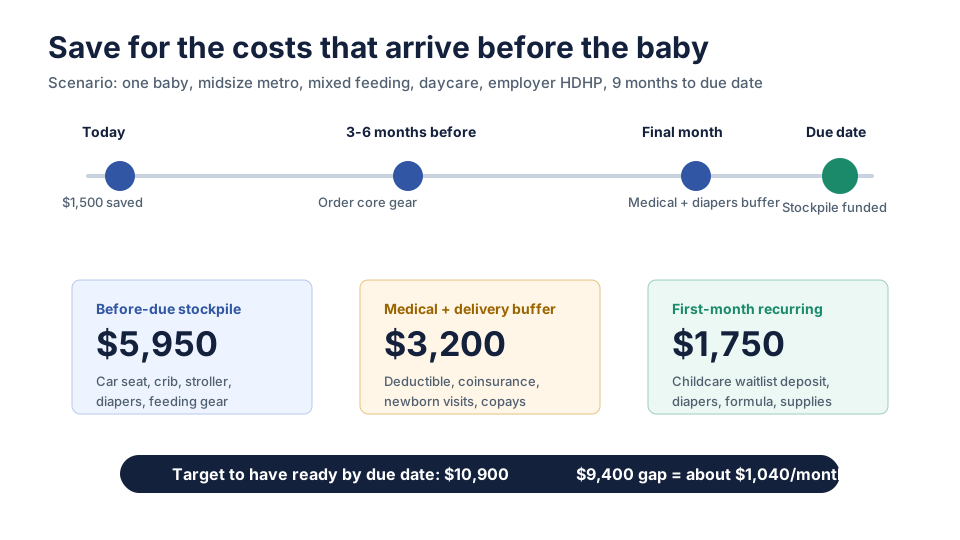
This article uses a slightly wider due-date target than the companion first-year timing guide because it includes a fuller first-month recurring cushion. The timing guide separates some early recurring costs into the birth-through-leave bucket, so its before-birth target is $10,350 instead of $10,900. Both numbers are using the same planning idea: keep the due-date savings target separate from the full first-year budget.
The family already has $1,500 saved, so the gap is:
$10,900 due-date target
-$1,500 current baby savings
= $9,400 remaining gap
Across those months, the savings plan lands at about $960 per month with a 4% high-yield APY, or about $980 per month with no interest. The APY helps a little, but the monthly contribution still matters far more.
Why Childcare Changes the Answer So Much
Childcare is often the largest swing factor in a first-year baby budget. Care.com's infant care data shows average U.S. infant daycare around $332 per week, or about $1,439 per month, while nanny care can be much higher. A family using family care or staggered work schedules may have a much lower cash cost, while a high-cost metro daycare or nanny can push the monthly plan far above this example.
That is why the pre-birth target should include at least the first childcare bill or deposit if care starts soon after leave. It is also why the full first-year number may be much higher than the due-date savings target.
As you weigh childcare options, the same scenario shifts like this:
| Childcare choice | What changes |
|---|---|
| Daycare | Adds a large monthly recurring cost after leave. |
| Nanny | Raises the monthly care line and may require payroll-tax planning. |
| Nanny share | Often sits between daycare and nanny care. |
| Family care | May reduce cash cost, but the family should still plan backup care. |
| Stay-home parent | May reduce childcare bills but can create an income or leave-planning question. |
This is the first assumption to revisit once you have real care quotes. Switching from daycare to family care or a nanny share can change both the due-date cash target and the year-one budget.
Medical Costs Need Their Own Buffer
Even insured families can have meaningful pregnancy, childbirth, postpartum, and newborn costs. KFF's analysis of employer-sponsored insurance claims found that maternity and infant care can include substantial total spending and out-of-pocket costs, especially when deductibles, delivery method, and newborn care are included.
For planning, do not try to guess the exact hospital bill from averages. Use your own plan documents:
- Deductible remaining this plan year
- Out-of-pocket maximum
- Coinsurance after deductible
- Separate baby deductible or family deductible rules
- Expected premium change after adding the baby
- Whether delivery and newborn care may cross a plan year
Then put a medical buffer in the baby plan. If the bill comes in lower, that cash becomes your first-year cushion.
Diapers, Formula, And Feeding Supplies Add Up Quietly
The recurring costs are smaller than childcare, but they are constant. Newborns often use many diapers per day, then the count gradually drops as they get older. Formula costs depend on whether the baby is exclusively formula fed, mixed fed, or mostly breastfed. Breastfeeding can reduce formula spending, but it can still involve pumps, bottles, storage bags, lactation support, and replacement parts.
For a simple first pass, build monthly lines for:
- Diapers and wipes
- Formula or feeding supplies
- Baby medicine and care supplies
- Clothing size changes
- Health-plan premium increase
- Childcare or backup care
The point is not to predict the exact brand. It is to make the monthly household budget absorb the new pattern before sleep deprivation makes money decisions harder.
What Changes Your Savings Target
Your number may be much lower or higher than $10,900.
| If this is true | Your target may move |
|---|---|
| You have a low deductible and strong insurance coverage | Medical buffer may be lower. |
| You have an HDHP or delivery may cross plan years | Medical buffer may need to be higher. |
| Family will provide childcare | First-month recurring cushion may be lower, but backup care still matters. |
| You need daycare immediately after leave | Save for deposits and the first month before birth. |
| You receive major registry gifts or hand-me-downs | Before-due stockpile can fall. |
| You prefer premium gear or live in a high-cost metro | Stockpile and childcare assumptions may rise. |
| You are expecting twins or triplets | Some items scale with each baby, while others do not. |
| One parent has unpaid leave | Add the income gap as a custom line item. |
Make the Example Your Own
Start from the March 2027 scenario, then test three versions:
- Change current savings, registry gifts, and hand-me-downs to your real starting point.
- Switch childcare between daycare, family care, nanny share, and nanny to see how much the due-date target moves.
- Adjust the medical buffer and first-month cushion using your insurance documents and care-provider deposit rules.
Compare stockpile-before-due, required monthly saving, first-month recurring cost, and the full first-year total before deciding what to automate.
Related: Baby's First-Year Budget: What Costs Hit Before Birth vs After Birth?, How Much Should You Save Each Month to Reach Your Goal?, and How Much Should You Have in an Emergency Fund?.
Sources
- Care.com infant care cost guide
- KFF health costs associated with pregnancy, childbirth, postpartum care, and infant care
- IRS Publication 503, Child and Dependent Care Expenses
- USDA overview of child-rearing cost categories
- Pampers diaper usage by age guide
This article is educational and is not financial, tax, insurance, or medical advice. Use your own insurance documents, employer benefits, childcare quotes, and household budget before making decisions.
More Savings Plan articles
Practical examples that connect the calculator to real planning decisions.
How Long Will It Take to Reach My Savings Goal?
Work backward from the monthly amount you can afford to see when your savings goal becomes realistic.
Baby's First-Year Budget: What Costs Hit Before Birth vs After Birth?
Separate first-year baby costs into what you need before birth, what hits during leave, and what becomes a monthly budget after childcare starts.
How Much Should You Save Each Month to Reach Your Goal?
Use a simple monthly savings formula, then adjust it for deadlines, starting balances, interest, and real-life catch-up months.