Short Answer
A first-year baby budget should not be one giant pile of costs. The useful plan separates what has to be ready before the baby is born from what starts after birth and what becomes a recurring monthly bill after leave.
For the example family in this article, the first-year cash plan is about $30,900. But only $10,350 needs to be ready before the due date. The rest arrives after birth, with the largest jump happening when childcare starts.
That timing matters. If you save for the full first-year number before the due date, the target can feel impossible. If you only buy registry items and ignore childcare, the budget can break three months later.
What A First-Year Baby Budget Really Means
When someone asks, "How much does the first year cost?" they may be asking three different questions:
- What do we need before birth? Gear, safe sleep, car seat, diapers, feeding basics, postpartum supplies, medical buffer, and deposits.
- What happens during leave? Diapers, wipes, feeding supplies, health-plan premium changes, newborn visits, and smaller replacement purchases.
- What changes after leave? Childcare, backup care, ongoing feeding and diaper costs, and the new household monthly baseline.
Those questions need different answers because they happen at different times. The pre-birth number is a savings target. The after-birth number is a cash-flow plan.
Example Scenario
Here is the scenario used in this article:
| Input | Scenario |
|---|---|
| Due date | March 20, 2027 |
| Region | Midsize metro |
| Baby count | One |
| Feeding plan | Mixed feeding |
| Childcare plan | Daycare after 12 weeks of leave |
| Insurance | Employer high-deductible health plan |
| Delivery assumption | Vaginal delivery |
| Current baby savings | $1,500 |
| Goal | Avoid credit-card debt for predictable first-year costs |
This is not a national average. It is a realistic planning example that shows how timing changes the answer.
Open this March 2027 first-year baby budget scenario to start with the $10,350 before-birth target, $1,500 already saved, a March 2027 due date, and a 4% APY, then map the timing buckets to your situation.
The Timing Breakdown
The family's first-year plan has three buckets:
| Timing bucket | Example amount | What it includes | How to plan for it |
|---|---|---|---|
| Before birth | $10,350 | Gear, safe sleep, transport, feeding setup, first diapers, postpartum supplies, medical buffer, and childcare deposit. | Save before the due date. |
| Birth through leave | $1,850 | Diapers, wipes, mixed-feeding supplies, newborn visits, premium change, and small replacement items before daycare starts. | Keep a short runway in checking or savings. |
| Childcare months | $18,700 | Daycare, diapers, feeding, health premium, clothing, care supplies, and backup care for months 4-12. | Adjust the household monthly budget. |
| First-year cash plan | $30,900 | The first-year planning total across all timing buckets. | Use as a full-year stress test, not a due-date savings target. |
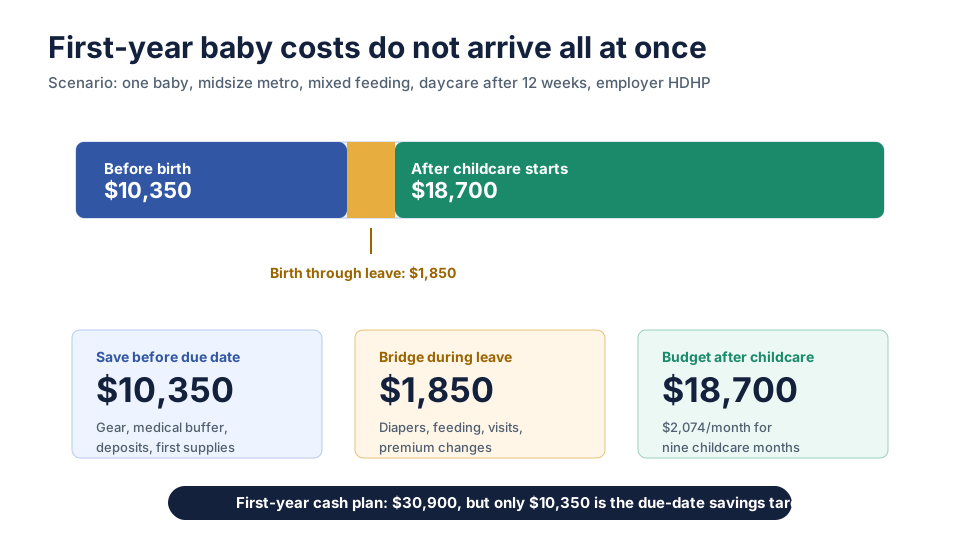
The important lesson is that the first-year total and the due-date target are different numbers. This family should not wait until it has $30,900 saved to feel prepared. It should focus first on the $10,350 due-date target, then make room for the monthly change before daycare starts.
What Hits Before Birth
Before birth, the plan is about readiness:
- Safe transport: car seat and stroller.
- Safe sleep: crib or bassinet, mattress, sheets, and sleep sacks.
- Feeding setup: bottles, pump parts, formula backup, storage bags, burp cloths, and cleaning supplies.
- Diapers and wipes: enough to avoid emergency store runs, not a full year of one size.
- Postpartum and recovery supplies.
- Medical buffer for deductibles, coinsurance, copays, delivery bills, and newborn care.
- Childcare deposits, waitlist fees, or the first month if the provider requires it early.
In this example, the before-birth bucket is $10,350. That is still a large number, but it is more actionable than a full first-year total because it has a due date and a savings gap.
If the family has $1,500 saved now, the remaining due-date gap is:
$10,350 before-birth target
-$1,500 current baby savings
= $8,850 remaining gap
With about nine months to go, the savings plan works out to about $900 per month at a 4% high-yield APY — roughly $920 per month with no interest. If gifts, hand-me-downs, or a cheaper childcare deposit reduce the pre-birth bucket, the monthly savings target falls too.
What Hits During Leave
The first few months after birth can feel cheaper than the later months if childcare has not started yet. That can be misleading.
During leave, this family still needs to plan for:
- Diapers and wipes.
- Formula or breastfeeding supplies.
- Newborn visits, medicines, thermometers, and care basics.
- Health-plan premium changes after adding the baby.
- Replacement clothing as sizes change.
- Small purchases that were not obvious before the baby arrived.
Pampers' diaper guidance notes that newborns often use the highest number of diapers per day, then usage generally declines as the baby grows. That means the early months are not free even when childcare has not started.
In this scenario, the leave-period cash need is about $1,850 across the first three months. The number is manageable compared with childcare, but it should be planned so the family does not mistake parental leave for the normal new budget.
What Changes When Childcare Starts
Childcare is usually the budget cliff.
Care.com's 2026 infant care cost guide reports average U.S. infant daycare around $332 per week, or about $1,439 per month. Nanny care can be materially higher. Local quotes may be lower or higher, but the lesson is durable: childcare can be larger than every other recurring baby cost combined.
For this family, months 4-12 look like this:
| Monthly line item after leave | Example amount |
|---|---|
| Daycare | $1,439 |
| Diapers and wipes | $95 |
| Mixed-feeding supplies | $120 |
| Health-plan premium increase | $180 |
| Clothing and care supplies | $125 |
| Newborn medical/copay allowance | $40 |
| Backup care and miscellaneous cushion | $75 |
| Monthly total after leave | $2,074 |
For nine childcare months, that is about $18,700. This is why the family should not only ask, "Can we buy the crib?" It should also ask, "Can our monthly budget absorb daycare by month four?"
Medical Costs Need A Separate Line
Do not hide medical costs inside the gear budget. KFF's analysis of pregnancy, childbirth, postpartum, and infant care costs for employer-plan enrollees found meaningful out-of-pocket exposure even when insurance is involved.
For planning, use your own insurance documents instead of a generic average:
- Remaining deductible.
- Coinsurance after deductible.
- Family deductible rules after the baby is added.
- Out-of-pocket maximum.
- Expected premium increase.
- Whether pregnancy, delivery, and newborn bills may cross plan years.
Treat this as part of the medical buffer in your before-birth savings target, not as diapers or gear. If the actual bills come in lower, the leftover cash becomes part of the first-year cushion.
What Changes The Answer
The timing buckets move for different reasons:
| If this changes | Before-birth target | After-birth monthly budget |
|---|---|---|
| Registry gifts or hand-me-downs | Usually lower | Usually little change |
| Delivery or insurance exposure | Could rise sharply | May add follow-up bills |
| Childcare deposit | May rise before due date | Monthly daycare still matters |
| Nanny instead of daycare | Deposit may change | Monthly budget rises sharply |
| Family care | May be lower | Monthly childcare may fall, but backup care still matters |
| Formula feeding | Some gear changes | Monthly feeding line rises |
| Twins or triplets | Many setup costs rise | Diapers, feeding, and childcare rise |
| Unpaid leave | Add an income-gap line | May lower later cash flow if savings are depleted |
The budget gets clearer when each cost has a timing label. A stroller, hospital bill, daycare deposit, and month-seven daycare payment are all real baby costs, but they do not hit the bank account the same way.
Common Mistakes
- Treating registry spending as the whole baby budget. The registry may cover gear, but childcare and health costs usually live outside it.
- Saving for the full first-year number before birth. This can make the goal feel impossible even when the real due-date target is smaller.
- Ignoring the month childcare starts. A family can be fine in month two and strained in month four.
- Buying a full year of diapers too early. Babies change sizes quickly, and different brands fit differently.
- Using averages without local quotes. Childcare, insurance, and housing-related child costs vary widely by region and household.
USDA's child-cost work is useful because it separates major household categories such as housing, food, transportation, clothing, health care, child care, education, and miscellaneous expenses. For a baby budget, the practical next step is to make those categories time-specific.
Make the Example Your Own
Start from the March 2027 scenario, then test three versions:
- Change registry gifts, hand-me-downs, and provider deposits to match what will actually be paid before birth.
- Switch the childcare plan and monthly care amount before deciding the first-year budget is affordable.
- Add custom lines for unpaid leave, insurance-plan quirks, or family help so the timing buckets reflect your household.
Compare the before-birth target, birth-through-leave runway, post-leave monthly cost, and full first-year total before deciding which number to save toward first.
Related: How Much Should You Save Before Your Baby Is Born?, How Much Should You Save Each Month to Reach Your Goal?, and How Much Should You Have in an Emergency Fund?.
Sources
- Care.com infant care cost guide
- KFF health costs associated with pregnancy, childbirth, postpartum care, and infant care
- USDA overview of child-rearing cost categories
- Pampers diaper usage by age guide
This article is educational and is not financial, tax, insurance, or medical advice. Use your own insurance documents, childcare quotes, employer benefits, and household budget before making decisions.
More Savings Plan articles
Practical examples that connect the calculator to real planning decisions.
How Long Will It Take to Reach My Savings Goal?
Work backward from the monthly amount you can afford to see when your savings goal becomes realistic.
How Much Should You Save Before Your Baby Is Born?
Plan the cash you should have ready before the due date, including gear, medical buffers, feeding and diaper supplies, and the first childcare deposit.
How Much Should You Save Each Month to Reach Your Goal?
Use a simple monthly savings formula, then adjust it for deadlines, starting balances, interest, and real-life catch-up months.