The money you need to buy a house is not just the down payment. A safer target is:
down payment + closing costs + moving/setup money + a post-closing reserve.
For a $500,000 home, that can mean about $142,500 saved before you feel truly ready, even though the purchase might close with about $115,000:
- $100,000 for a 20% down payment
- $15,000 for estimated closing costs at 3%
- $7,500 for moving, setup, inspections, and small immediate fixes
- $20,000 kept as a reserve after closing
That does not mean every buyer needs 20% down. Some loans allow much less, and that can be reasonable when the monthly payment still works. The point is simpler: do not stop your savings plan at the down payment. The cash that keeps a home purchase healthy is the cash you still have after the keys are yours.
What "Cash to Close" Means
Cash to close is the amount you bring to the closing table after deposits, credits, and loan details are settled. It usually includes your down payment plus closing costs and prepaid items. It does not include every dollar you should have saved.
That distinction matters because the most expensive week of buying a house is often not only closing day. You may also pay movers, buy appliances, replace locks, handle a repair the seller would not cover, or bridge a rent and mortgage overlap.
Closing costs commonly run 2% to 5% of the home purchase price, on top of the down payment — the Consumer Financial Protection Bureau's guide to closing costs explains what those charges actually cover. Fannie Mae's down payment guide also frames the down payment as one part of the buying plan, alongside closing costs and loan choices.
A Real 2026 Scenario
Let's use a buyer looking at a $500,000 home and planning to put 20% down. The major upfront costs separate into a cash-to-close number and a safer readiness target.
| Input | Value |
|---|---|
| Home price | $500,000 |
| Down payment | 20% |
| Estimated closing costs | 3% |
| Moving/setup cushion | 1.5% |
| Post-closing reserve | 4% |
Open the prefilled $500,000 cash-needed scenario to start with the assumptions above, then map the home price, down payment, mortgage rate, closing costs, and ownership costs to your situation.
When you replace the example with your own numbers, swap these estimates first:
| Local estimate to replace | Example assumption | What to use instead |
|---|---|---|
| Closing costs | 3% of purchase price | Your lender's Loan Estimate, or a 2% to 5% stress test |
| Prepaid taxes and insurance | Included in closing costs | Local tax escrow and insurance quote |
| Moving/setup cushion | 1.5% of purchase price | Your mover quote, overlap rent, utility starts, and first repairs |
| Post-closing reserve | 4% of purchase price | Cash you want left after closing, ideally separate from emergency savings |
Here is the savings target:
| Money category | Amount | What it covers |
|---|---|---|
| Down payment | $100,000 | Equity at purchase and a lower loan balance |
| Closing costs | $15,000 | Lender, title, escrow, recording, prepaid taxes/insurance |
| Moving/setup cushion | $7,500 | Movers, utility starts, basic repairs, locks, supplies |
| Post-closing reserve | $20,000 | Cash you keep after closing for emergencies and early ownership surprises |
| Safer readiness target | $142,500 | Cash needed before the purchase feels resilient |
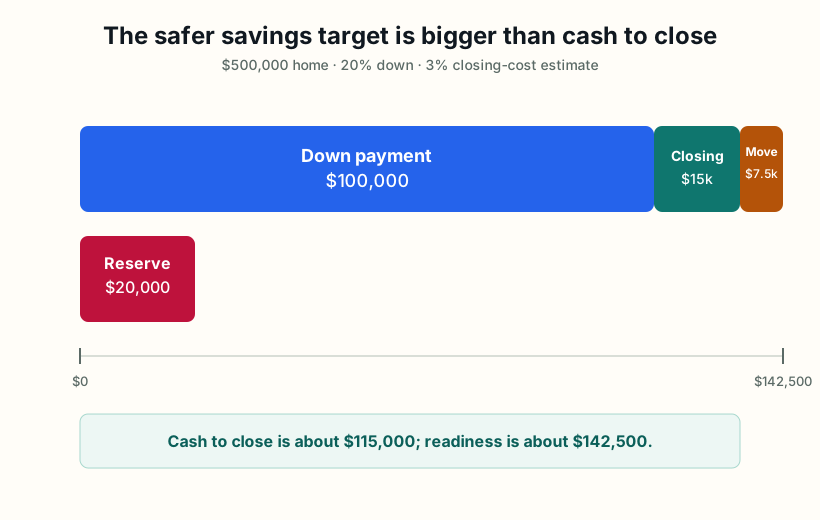
The closing itself may use about $115,000 in this scenario, but the safer target is higher because you still need cash after the purchase.
Why the Down Payment Is Only One Line
The down payment is usually the biggest number, so it gets all the attention. But it is not the only required cash.
Closing costs can include lender fees, appraisal, title work, recording fees, escrow deposits, prepaid interest, and prepaid insurance. Some are fixed; some scale with the home price and loan size. The Loan Estimate and Closing Disclosure are designed to show these costs before closing, but you should plan for them before you are under contract.
The moving/setup cushion is not a formal mortgage requirement. It is a practical one. First-time buyers often underestimate the small items that arrive quickly: moving help, cleaning, utility deposits, window treatments, tools, repairs, paint, furniture gaps, and the first maintenance issue.
The reserve is the line that protects the plan. It keeps a normal homeownership surprise from becoming credit-card debt a month after closing.
What If You Put Less Than 20% Down?
You may not need 20% down to buy. The tradeoff is that a smaller down payment usually means a larger loan, a higher monthly payment, and often mortgage insurance. The CFPB explains that lenders commonly require private mortgage insurance when a conventional buyer puts down less than 20%.
If you are comparing 10% down against 20% down, read PMI Explained: What a Smaller Down Payment Really Costs next. The monthly payment can still work, but only if PMI is included in the all-in ownership budget.
For the broader monthly-payment picture after the loan closes, pair this with The True Cost of Owning a Home, which adds maintenance, taxes, insurance, and other ownership costs to the mortgage payment.
Here is how the upfront target changes on the same $500,000 home:
| Down payment path | Down payment | Closing costs | Moving/setup | Reserve | Total saved before buying |
|---|---|---|---|---|---|
| 5% down | $25,000 | $15,000 | $7,500 | $20,000 | $67,500 |
| 10% down | $50,000 | $15,000 | $7,500 | $20,000 | $92,500 |
| 20% down | $100,000 | $15,000 | $7,500 | $20,000 | $142,500 |
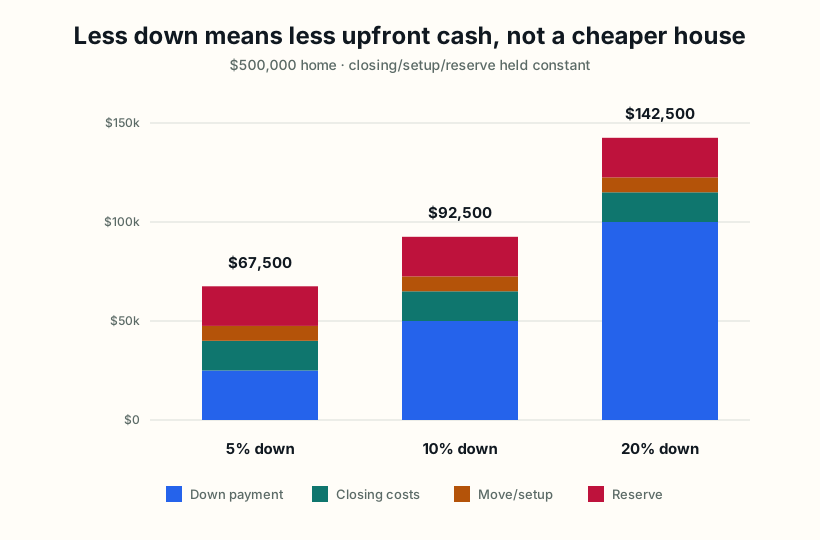
A lower down payment can make the purchase possible sooner. It does not make the house cheaper; it shifts more cost into the monthly payment and may add PMI.
A Simple Readiness Rule
Before you make an offer, try this four-part test:
- You can cover the down payment without draining every account.
- You have a realistic estimate of closing costs, usually tested at 2% to 5% of the price.
- You have a moving and setup cushion for the first month.
- You still have an emergency reserve after closing.
If one of those lines is missing, the purchase may still happen, but the plan is thinner than it looks.
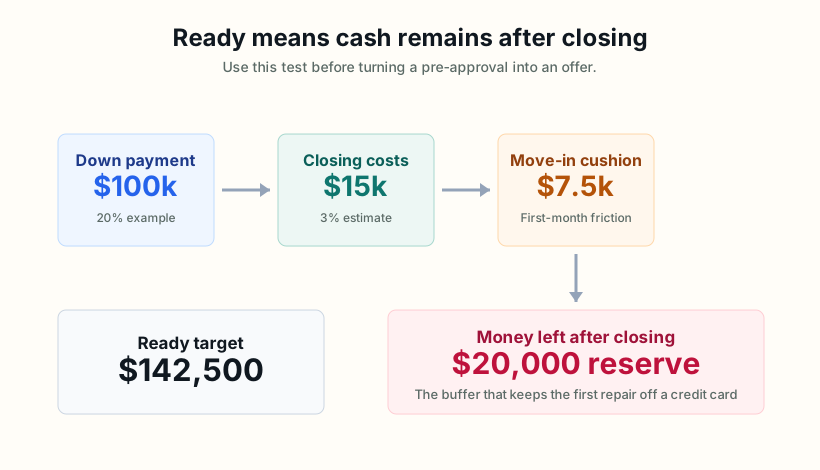
The reserve is not extra decoration. It is the line that keeps the first surprise repair from becoming a debt problem.
Common Mistakes
- Counting the down payment as the whole goal. A $100,000 down payment does not mean a $100,000 savings target if closing costs are another $15,000.
- Forgetting that closing costs vary. A 3% estimate is useful for planning, but your lender, state, taxes, insurance, and credits can move the number.
- Spending the reserve to make the deal work. If the last $10,000 is the only way to close, the home may be stretching the budget too far.
- Ignoring the first month after closing. Moving, utility starts, overlap rent, basic repairs, and setup costs often arrive before the first mortgage payment.
- Assuming 20% down is always best. A bigger down payment lowers the loan, but it can be a mistake if it leaves you with no cash buffer.
Make the Example Your Own
Start from the article assumptions, then test these versions:
- Drop the down payment to 10% and watch the monthly payment and PMI change.
- Raise closing costs from 3% to 5% to stress-test a high-cost state or loan.
- Add a larger maintenance or "other" expense if the home is older.
- Change the home price until the total cash target and all-in monthly payment both feel workable.
If you are still building the savings target, use the Savings Plan to set the timeline. If you are deciding whether buying makes sense at all, compare the ownership plan with the Rent vs. Buy calculator.
A Note on Assumptions
This article uses a planning estimate of 3% for closing costs, 1.5% for moving/setup costs, and 4% of the home price as a post-closing reserve. Your actual numbers can differ based on location, lender, loan type, credits, inspection findings, taxes, and insurance. Treat the scenario as a starting point, then replace every assumption with your real quote or local estimate before making an offer.
Sources
- Consumer Financial Protection Bureau: What are closing costs?
- Consumer Financial Protection Bureau: Prepare to shop for a mortgage
- Fannie Mae: What You Need To Know About Down Payments
This article is educational and not personalized financial, tax, mortgage, or investment advice.
Related
- Home Buyer calculator — estimate cash to close and ownership costs
- Savings Plan — build the down payment and closing-cost fund
- Rent vs. Buy calculator — compare the ownership timeline before you buy
More Home Affordability Calculator articles
Practical examples that connect the calculator to real planning decisions.
PMI Explained: What a Smaller Down Payment Really Costs
See what PMI really costs in a 2026 home-buying scenario, when it can drop off, and how 10%, 15%, and 20% down payments change the plan.
The True Cost of Owning a Home (It's Not Just the Mortgage)
Estimate the all-in monthly cost of owning a home, including mortgage, taxes, insurance, maintenance, PMI, and unrecovered costs.