Short Answer
A realistic wedding budget starts with your guest count, location, venue style, and the few things you care about most. National averages are useful context, but they are not a budget. In recent wedding cost reporting, the typical U.S. wedding is often described in the mid-$30,000 range, while the median can be meaningfully lower. That gap matters because a few very expensive weddings can pull the average up.
For a first planning pass, build the budget from five numbers:
- Guests you actually expect to host.
- Venue, food, bar, service, and rental costs.
- Photo, video, entertainment, attire, flowers, stationery, and transportation.
- Taxes, service charges, tips, delivery fees, permits, and other often-missed costs.
- A contingency line, usually 5% to 10%, so the plan can absorb surprises.
Then pressure-test the plan, replace estimates with vendor quotes as they arrive, and track each deposit and remaining balance.
What a Wedding Budget Means
A wedding budget is not just a single maximum number. It is a plan for what the wedding will cost, who is paying, and when the money has to leave your account.
That timing is easy to underestimate. A venue deposit might be due right away. A photographer may require a retainer months before the wedding. Final catering, bar, rental, beauty, transportation, and entertainment payments often cluster near the wedding date. Two weddings can both cost $32,000, but one can feel much harder to cash-flow if most payments arrive in the same month.
Why Averages Are Only a Starting Point
Cost studies from wedding marketplaces and finance publishers are useful because they show the current scale of wedding spending. They also show why your own plan can differ sharply from a headline average.
The biggest reasons are:
- Guest count: Food, bar, rentals, invitations, favors, and some staffing costs move with headcount.
- Location: Major metros and high-demand wedding markets often price very differently from smaller cities or rural venues.
- Venue model: An all-inclusive venue can be simpler, while a bare venue can require separate catering, rentals, staff, cleanup, and coordination.
- Date and season: Saturday evenings in peak season usually leave less room to negotiate.
- Priorities: A couple that values photography and food may spend very differently from a couple prioritizing flowers, live music, or a destination weekend.
Use averages to set expectations. Use your own guest count and vendor quotes to set the actual budget.
Example Scenario: A $32,000 Wedding
Here is a grounded starter scenario for Ana and Marco:
- Wedding date: September 2027
- Guests: 90
- Location: mid-cost U.S. metro
- Style: single-venue ceremony and reception
- Current savings: $8,000
- Family contribution: $6,000
- Target budget: $32,000
- Planning goal: keep the wedding funded without using high-interest debt
Their first-pass budget might look like this:
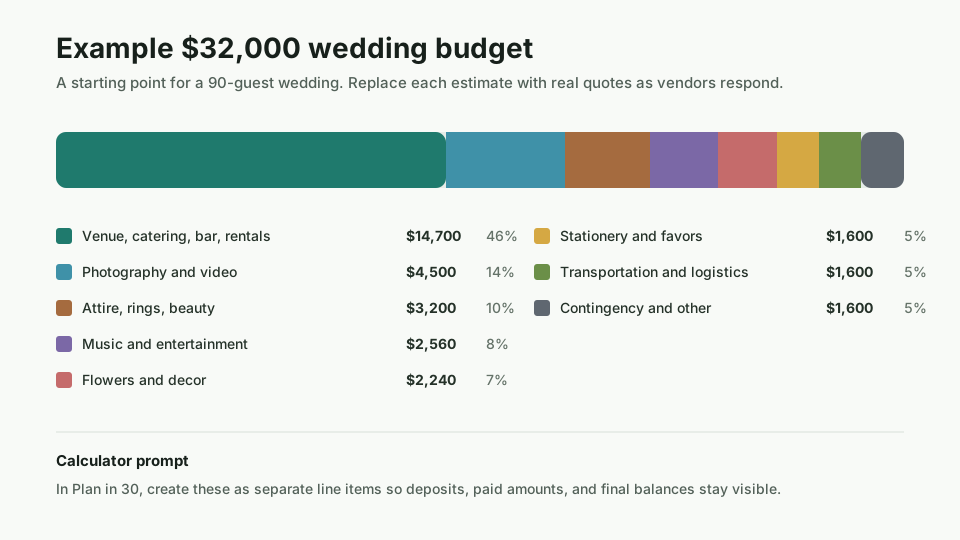
| Category | Estimate | Why it matters |
|---|---|---|
| Venue, catering, bar, rentals | $14,700 | Usually the largest combined cost and most sensitive to guest count |
| Photography and video | $4,500 | Often booked early and paid with a retainer plus final balance |
| Attire, rings, beauty | $3,200 | Easy to underestimate after alterations, accessories, and trials |
| Music and entertainment | $2,560 | DJ, musicians, ceremony audio, or reception extras |
| Flowers and decor | $2,240 | Can flex widely depending on centerpieces, ceremony decor, and season |
| Stationery and favors | $1,600 | Save-the-dates, invitations, postage, signage, favors, and small paper goods |
| Transportation and logistics | $1,600 | Shuttles, parking, delivery, setup, teardown, permits, or security |
| Contingency and other | $1,600 | Buffer for tips, taxes, service charges, rush fees, and late additions |
| Total | $32,000 | Starting estimate before real quotes |
This is not a rule. It is a calculator scenario. If Ana and Marco get a venue quote that already includes tables, chairs, linens, catering, bar, staff, and cleanup, several lines may move into one package. If the venue is only a room rental, those same costs may need to be added separately.
Open the prefilled Ana and Marco $32,000 wedding budget to start with the category totals from the example, then map the vendor quotes, deposits, and timing to your wedding.
The Fastest Way to Pressure-Test the Budget
Before booking, run three versions of the plan:
- Base case: The wedding you think you want today.
- Higher-cost case: Add service charges, tax, gratuity, delivery, overtime, and a larger contingency.
- Lower-cost case: Reduce guest count, change bar package, simplify flowers, or move the date.
This helps you see which choices actually change the total. Cutting small decor items may feel productive, but if the budget is $8,000 over target, guest count, venue model, food, bar, and date usually deserve attention first.
What Changes the Answer Most?
Guest Count
Guest count affects catering, bar, rentals, stationery, favors, transportation, and venue capacity. If the quote is $150 per person for food and bar, trimming 20 guests can change the plan by $3,000 before counting smaller per-guest items.
If guest list size is the main open question, use the companion guide, Wedding Budget by Guest Count, to compare how 50, 100, and 150 guests change fixed costs, per-guest costs, and venue step-ups.
Venue Package
Ask whether the quote includes tables, chairs, linens, dishes, barware, staffing, setup, teardown, ceremony space, rehearsal time, service charges, tax, insurance, security, and overtime. A lower venue fee can still become expensive if the missing pieces are large.
Payment Schedule
A budget that looks affordable on paper can become stressful if deposits and final balances come due before the savings are available. Track the payment date, paid amount, and remaining amount for each line item.
Contingency
A budget with no buffer usually becomes a budget that breaks. Even careful couples run into postage, alterations, vendor meals, tips, rain plans, delivery fees, or last-minute rentals.
Common Mistakes
- Starting with a venue tour before agreeing on guest count and total budget.
- Comparing venue quotes without normalizing what is included.
- Forgetting service charges, tax, gratuity, and final payment dates.
- Treating a national average as a promise that local vendors will fit it.
- Saving for the total wedding but not mapping when deposits are due.
- Leaving no room for a contingency line.
Make the Example Your Own
Start from the article assumptions, then test three versions:
- Replace the sample venue, photo, attire, entertainment, flowers, stationery, transportation, and contingency lines with real vendor quotes.
- Move one big lever at a time: 70 guests instead of 90, a Friday instead of Saturday, or a simpler bar package.
- Add service charges, tax, gratuity, delivery, overtime, and deposit dates before deciding the budget works.
Related: How Much to Save Each Month can help turn the wedding target and date into a monthly savings number.
Sources and Notes
- The Knot average wedding cost and Real Weddings data
- The Knot 2026 Real Weddings Study data readout
- NerdWallet guide to average wedding cost
- NerdWallet guide to creating a wedding budget
- Axios coverage of Zola 2025 wedding cost trends
- New Jersey Division of Consumer Affairs wedding planning and scam tips
This article is educational planning content, not personalized financial, legal, or tax advice. Vendor contracts, refund rights, and required disclosures can depend on your state and the specific contract.
More Wedding Budget Calculator articles
Practical examples that connect the calculator to real planning decisions.