The easiest mistake in a lease-vs-buy decision is comparing only the monthly payment. A lease often has the lower payment, but buying can build equity and may cost less if you keep the car long enough.
Short answer: leasing can make sense when you want a newer car every few years, drive predictable mileage, and value lower short-term payments. Buying usually looks better when you keep the car beyond the loan term, drive a lot, or want flexibility to sell, trade, modify, or pay the car off.
The better question is not "Which payment is lower?" It is:
What will this car cost me over the period I actually expect to use it, after fees, mileage, equity, resale value, and the next car decision?
What Leasing and Buying Mean
Buying a car means you own the vehicle once the loan is paid off. While you are financing it, your payment goes toward interest and principal. The car can still lose value, but you may have trade-in or resale value later.
Leasing means you pay for the right to use the car for a set number of months and miles. The Consumer Financial Protection Bureau explains that lease payments do not usually go toward owning the car unless the agreement includes a purchase option. At the end, you return the car or buy it if the contract allows.
The FTC's car financing guidance frames leasing as paying for expected depreciation, rent charges, taxes, and fees during the lease period. That is why the payment can look lower than a loan payment for the same vehicle.
A Real 2026 Scenario
Imagine Jordan is choosing between leasing and buying a $42,000 crossover. Jordan expects to drive about 12,000 miles per year and wants to compare the first three years.
| Input | Lease offer | Buy with loan |
|---|---|---|
| Vehicle price | $42,000 | $42,000 |
| Cash due/down payment | $3,000 | $3,000 |
| Term being compared | 36 months | First 36 months of a 60-month loan |
| Monthly payment | $515 | $760 |
| End-of-term fee or sale step | $395 disposition fee | Estimate resale/trade value |
| Mileage assumption | 12,000 miles/year | 12,000 miles/year |
| Estimated car value after 3 years | Contract residual controls buyout | $27,000 resale/trade value |
| Loan balance after 3 years | Not applicable | About $18,100 |
Open the prefilled Jordan lease-vs-buy scenario to start with the assumptions above, then map the vehicle price, lease quote, loan terms, mileage, resale value, and time horizon to your situation.
At first glance, the lease is easier on monthly cash flow. Over 36 months, Jordan pays:
| Three-year comparison | Lease | Buy |
|---|---|---|
| Upfront cash | $3,000 | $3,000 |
| Monthly payments | $18,540 | $27,360 |
| End fee or sale value | $395 fee | $27,000 value minus about $18,100 loan balance |
| Net 3-year cost | About $21,935 | About $21,460 after estimated equity |
In this scenario, the lease payment is much lower, but the three-year cost is close because buying leaves Jordan with estimated equity. Change the resale value, interest rate, lease money factor, mileage, or how long Jordan keeps the car, and the answer can move quickly.
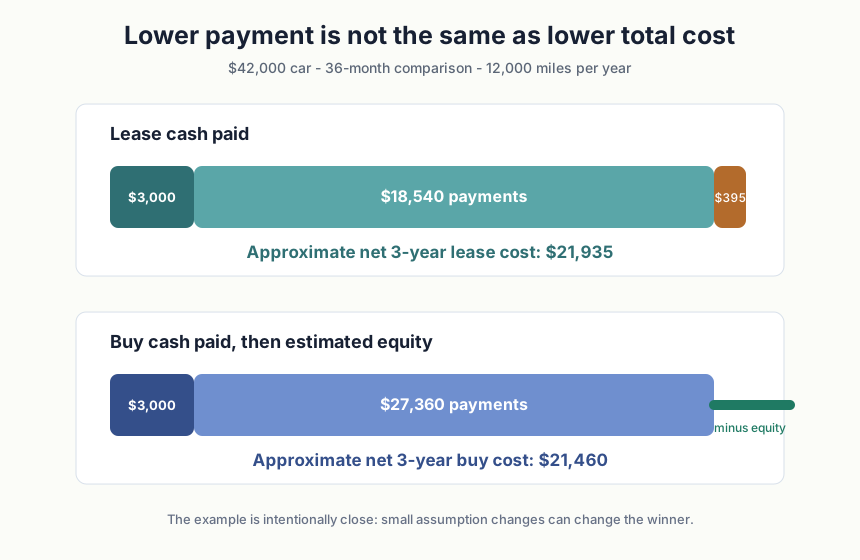
The lease has lower monthly payments. The purchase has higher payments but may leave equity when the car is sold or traded.
Why Monthly Payment Is Not Enough
A lease payment is a cash-flow number. It is not the whole cost.
A loan payment is also a cash-flow number. It includes principal that may become equity, but the car is still depreciating while you pay it down.
That is why lease-vs-buy math needs at least five lines:
- Upfront cash due today.
- Monthly payments during the comparison period.
- Fees, taxes, and end-of-term charges.
- Mileage and wear limits.
- Equity, resale value, or buyout value at the end.
The Edmunds lease-vs-buy calculator and Bankrate's lease-vs-buy calculator both reflect the same idea: the useful comparison is not just payment versus payment. It is the total cost across a defined time period.
When Leasing Tends To Fit
Leasing may be a reasonable fit when:
- You want a newer car every few years.
- Your annual mileage is predictable and comfortably inside the lease limit.
- You do not want to handle resale or trade-in timing.
- The lease has strong manufacturer incentives.
- You value lower short-term payments more than long-term ownership.
The risk is that leasing can feel cheap while quietly narrowing your options. Extra miles, excess wear, early termination, acquisition fees, disposition fees, and a new decision every few years can add up.
When Buying Tends To Fit
Buying may be a better fit when:
- You plan to keep the car after the loan is paid off.
- You drive more miles than a standard lease allows.
- You want flexibility to sell, trade, modify, or keep the car.
- You can handle higher payments now for lower costs later.
- You want to avoid lease-end condition and mileage reviews.
Buying is not automatically cheaper. A long loan, high interest rate, weak resale value, or fast depreciation can make buying expensive too. The point is that buying gives you a residual asset; leasing gives you defined use.
The Decision Flow
Use this sequence before you compare offers:
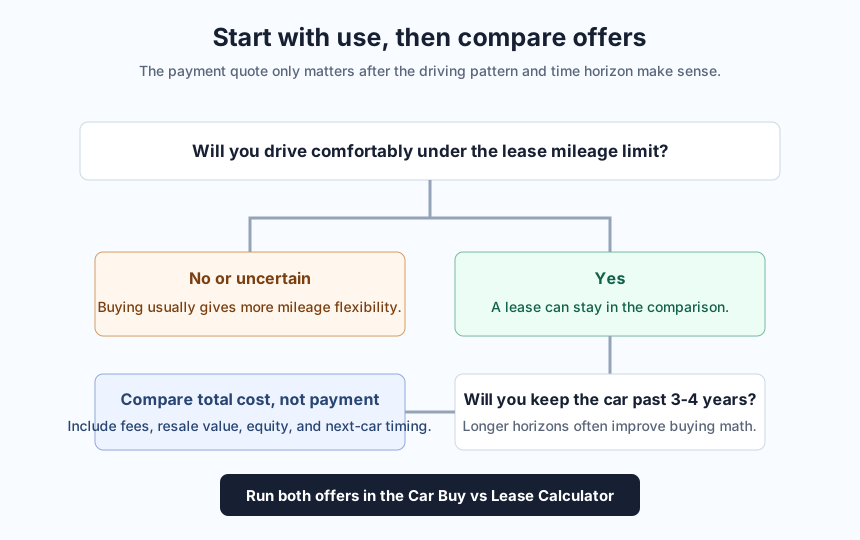
Start with driving pattern and time horizon before comparing payment quotes.
Common Mistakes
- Optimizing for the lowest payment. A low payment can still be the more expensive deal if fees, mileage, or repeat leases add up.
- Ignoring mileage. The FTC notes that leases commonly include mileage limits and may charge extra if you exceed them.
- Treating down payment and due-at-signing as the same thing. Lease cash due at signing may include the first payment, acquisition fee, taxes, title, and cap-cost reduction.
- Forgetting the next car. A lease ends with a return, buyout, or another lease. A purchase can end with a paid-off car, trade-in, sale, or continued ownership.
- Comparing different cars. A subsidized lease on one model and a high-interest loan on another model is not a clean lease-vs-buy comparison.
- Skipping the out-the-door price. The FTC recommends getting the total price in writing before discussing financing so you can compare offers more clearly.
Make the Example Your Own
Start from Jordan's assumptions, then test these versions:
- Raise annual mileage to 15,000 or 18,000 miles if your driving could exceed the lease allowance.
- Lower the three-year resale value to stress-test depreciation.
- Compare three years with six or eight years of ownership if you might keep the car longer.
- Set lease due-at-signing to zero and map the payment to the dealer quote.
- Add end-of-lease fees or expected excess wear if the written lease makes those likely.
If the purchase looks close after only three years, buying may become stronger if you keep the car longer. If the lease is cheaper even after realistic fees and mileage, leasing may fit your actual use case.
A Simple Rule Of Thumb
Lease when you are buying flexibility for the first few years and your mileage is predictable.
Buy when you are buying long-term control and expect to keep value after the payment period.
Neither choice is universally better. The right answer depends on the offer, the car's value, your driving pattern, and how soon you want the next vehicle decision.
This article is educational and not personalized financial, tax, legal, or car-buying advice.
Related
- Car Buy vs Lease Calculator - compare your lease and loan offers
- Is Leasing a Car Cheaper Than Buying? - run the focused three-year payment and equity math
- Home Buyer Calculator - plan another major purchase with cash-flow and upfront-cost assumptions
- Savings Plan - build the down payment or due-at-signing fund
Sources
More Car Buy vs Lease Calculator articles
Practical examples that connect the calculator to real planning decisions.