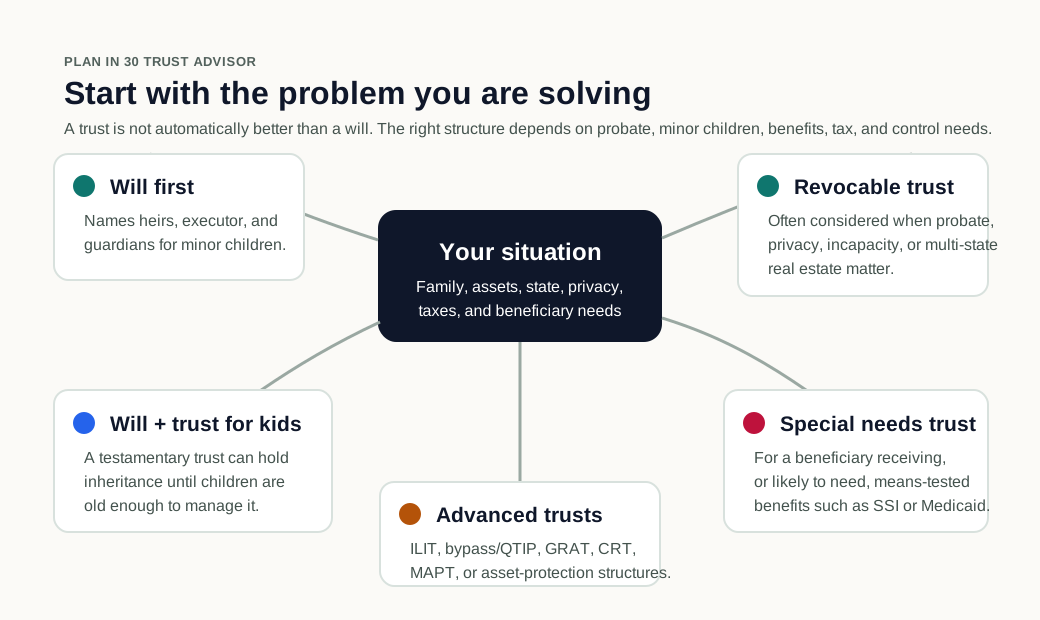
A trust is not automatically better than a will. A will is not automatically too simple. The right answer depends on what problem you are trying to solve.
For many people, the starting point is still a will, beneficiary designations, powers of attorney, and a health care directive. A trust becomes more useful when you need probate avoidance, privacy, continuity if you become incapacitated, control over how beneficiaries receive money, special-needs planning, state estate-tax planning, or more advanced wealth-transfer work.
The short version:
- You probably need a will even if you create a trust. A will names an executor, can name guardians for minor children, and can catch assets that never made it into the trust.
- A revocable living trust can help with probate and privacy, but only for assets actually titled to the trust.
- A testamentary trust can be enough for some parents of minor children, but assets still generally pass through probate first.
- A special needs trust is its own category because a direct inheritance can affect means-tested benefits.
- Advanced irrevocable trusts are not beginner tools. They usually belong in a conversation with an estate-planning attorney and tax advisor.
For a deeper side-by-side, compare a revocable living trust with a will before deciding which document belongs in the first attorney conversation.
What Each Document Actually Does
A will is a set of instructions that becomes active at death. It says who receives property, who handles the estate, and, for parents, who should care for minor children. A will does not usually avoid probate by itself.
A trust is a legal arrangement where a trustee holds property for beneficiaries. Some trusts are created during life. Some spring into existence through a will. Some are easy to change. Some are intentionally hard to change.
That is why the question is not "will or trust?" The better question is:
What would go wrong if I died or became incapacitated tomorrow, and which document solves that problem?
When a Will May Be Enough
A will-based plan can be enough when the estate is simple, the beneficiaries are adults, there are clear beneficiary designations on retirement accounts and life insurance, and probate is not a major concern in the state where the person lives.
That does not mean "just write a will and forget it." A will-based plan still needs supporting pieces:
- Beneficiary designations on retirement accounts, life insurance, and transfer-on-death accounts
- Durable financial power of attorney
- Health care proxy or advance directive
- Executor choice
- Guardian nomination for minor children, if relevant
- A list of accounts, passwords, advisors, and insurance policies
The key limitation is that a will generally sends probate assets through probate. Probate can be straightforward in some states and slow or expensive in others. It can also create a public record. That is why a trust may enter the conversation even when federal estate tax is not an issue.
When a Trust Starts to Make Sense
A trust starts to become useful when the problem is not merely "who gets my stuff?"
Consider raising the trust question if any of these are true:
- You own a home and want to reduce probate friction for heirs.
- You own real estate in more than one state.
- You want more privacy than a probate file may provide.
- You want someone to manage assets without court involvement if you become incapacitated.
- You have minor children and want to control when they receive money.
- You have a beneficiary with special needs or means-tested benefits.
- You have a blended family and want to provide for a spouse while protecting children from a prior relationship.
- You have state estate-tax exposure even if you are below the federal threshold.
- You own a business, rental properties, concentrated stock, or large life insurance policies.
The 2026 federal estate-tax exclusion is high: the IRS lists the basic exclusion amount at $15,000,000 for deaths in 2026. That means most families are not creating trusts because they owe federal estate tax. They are creating trusts because probate, incapacity, privacy, control, benefits, state law, or family complexity makes the planning problem bigger than a will alone.
The Scenario: A Young Family With Kids, a House, and Life Insurance
To make this concrete, here is a sample household using the Trust Advisor's built-in young-family pattern:
- Married couple
- Two minor children
- No current will
- No existing trust
- Primary residence worth about $620,000 with a mortgage
- Retirement accounts
- $3,000,000 of term life insurance
- Probate avoidance is a priority
- Privacy is a concern
- State estate-tax concern is flagged
- They want some control over how children receive money
This is not a billionaire family. It is a normal household with a planning problem that gets serious fast if both parents die while the kids are young.
The Trust Advisor scores multiple structures because more than one issue is present:
| Structure | Score | Why it appears |
|---|---|---|
| Revocable living trust | 65 | Probate avoidance, privacy, no current documents |
| Testamentary trust | 65 | Minor children, no existing trust |
| Pet trust | 60 | Pet care was flagged in the sample profile |
| Bypass trust | 45 | Married couple plus state estate-tax concern |
| Payable-on-death account | 45 | Simple probate avoidance for certain accounts |
| ILIT | 40 | Large life insurance policy, but no federal taxable-estate concern |
| Spendthrift trust | 30 | Desire to control distributions and minor children |
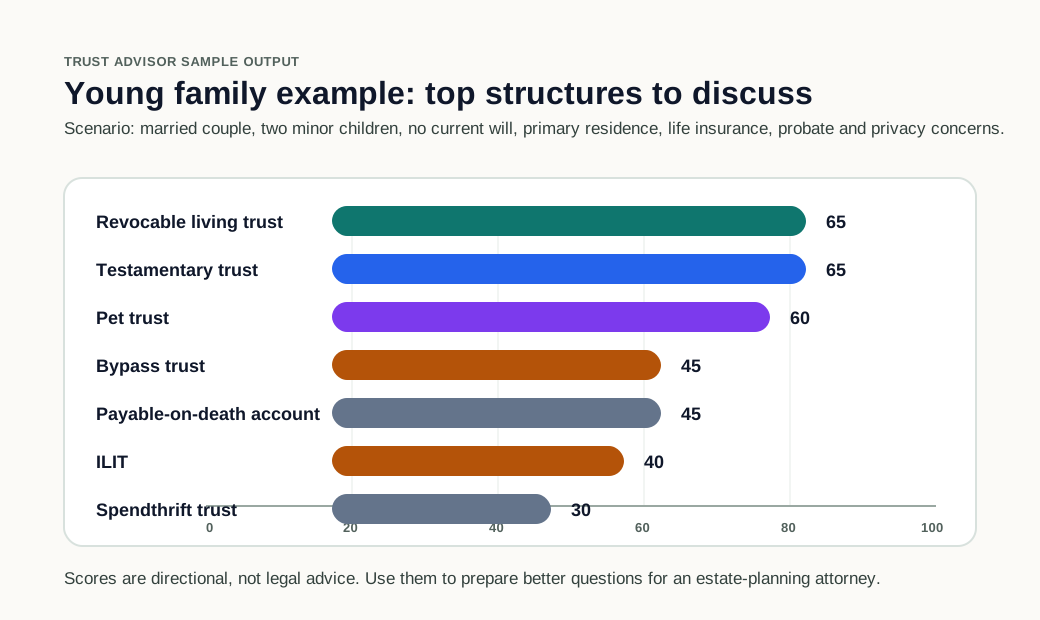
This output does not mean the family should create every trust on the list. It means the first attorney meeting should not be "please draft a generic will." The better meeting agenda is:
- Do we need a revocable living trust for probate, privacy, and incapacity continuity?
- If we do not use a living trust, should the will include a testamentary trust for the children?
- How should life insurance be coordinated with guardianship, trustee choice, and child distributions?
- Does our state estate-tax system change the plan?
- Which assets need beneficiary updates or retitling?
That is exactly where a good recommender helps: not by replacing the lawyer, but by making the first lawyer conversation sharper.
Open the prefilled young-family trust-or-will scenario to start with the minor children, home, life insurance, probate, privacy, pet care, and state-tax drivers from the example, then map the drivers to your family.
Will-Only vs Funded Trust Path
The biggest practical difference is administration.
With a will-only plan, probate assets usually go through a court process. The court validates the will, appoints the executor, and oversees the estate administration according to state law.
With a funded revocable trust, assets titled to the trust can often be administered by the successor trustee outside probate. That can preserve privacy and reduce court involvement. But the word "funded" matters. A revocable trust that owns no assets may not avoid probate for the assets left outside it.
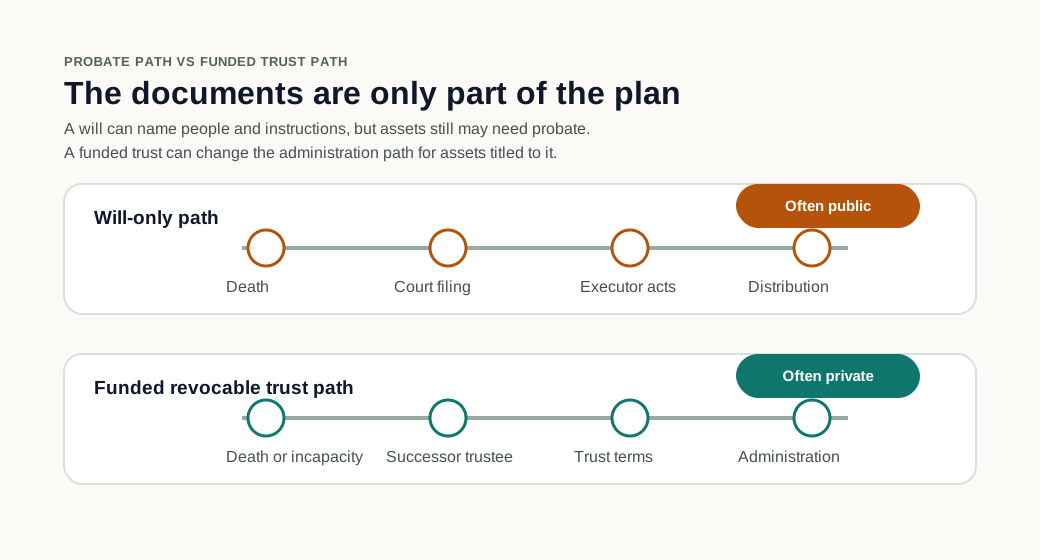
This is the part people miss. The trust document is not the whole job. The practical work is updating titles, beneficiary designations, account ownership, and instructions so the documents and assets match.
Five Questions to Ask Before Paying for a Trust
1. What happens to minor children?
Parents usually need a will because a will can name guardians for minor children. But the money question is separate from the custody question.
If children inherit directly while they are minors, a court-supervised arrangement may be needed. A testamentary trust or living trust can hold assets until chosen ages or milestones. The right choice depends on state law, asset size, probate concerns, and how much administration the parents want during life.
2. Are you trying to avoid probate, or just name beneficiaries?
If most assets already have beneficiary designations, probate exposure may be smaller than expected. Retirement accounts, life insurance, and certain bank/brokerage accounts can pass by beneficiary designation.
But a home, personal property, non-beneficiary accounts, and assets titled only in one person's name may still create probate issues. A revocable living trust is often about the assets that beneficiary forms do not handle cleanly.
3. Is privacy important?
Probate can create public filings. A trust can keep more of the administration private. Privacy may matter for families with high visibility, conflict risk, vulnerable beneficiaries, or simply a desire not to put asset transfers into public records.
4. Is anyone receiving public benefits?
Special needs planning deserves extra care. The Social Security Administration's trust policy explains that trust property may or may not count as a resource for SSI purposes depending on the structure and the beneficiary's rights. ACTEC also emphasizes that a special needs trust is designed to support a beneficiary without jeopardizing public benefits.
If a beneficiary receives or may need SSI, Medicaid, or similar means-tested benefits, do not leave assets directly without legal advice. This is one of the clearest cases where the trust question becomes urgent.
5. Is tax really the main issue?
Federal estate tax is not the main issue for most families in 2026 because the federal exclusion is high. But state estate tax, inheritance tax, retirement account tax rules, income tax, property tax, and beneficiary-specific issues can still matter.
The practical point: do not assume "I am below the federal exemption, so I do not need a trust." Also do not assume "I have a house, so I definitely need a trust." Model the actual drivers.
A Simple Decision Framework
Use this as a starting point before meeting an attorney:
| Situation | Usually points toward |
|---|---|
| Simple estate, adult beneficiaries, low probate concern | Will, powers of attorney, beneficiary designations |
| Minor children | Will plus guardian nomination; possible testamentary trust |
| Homeowner with privacy/probate concerns | Revocable living trust discussion |
| Real estate in multiple states | Revocable living trust discussion |
| Beneficiary with special needs | Special needs trust attorney discussion |
| Blended family | QTIP/marital trust or other tailored trust discussion |
| Large life insurance plus estate-tax concern | ILIT discussion |
| Long-term care planning concern | Elder-law attorney; possible Medicaid planning trust |
| Business or liquidity event | Advanced estate-planning attorney and tax advisor |
The answer may be "will only for now." That is a valid outcome. A clean will with correct beneficiaries and powers of attorney beats an expensive trust that was never funded.
Make the Example Your Own
Start from the article assumptions, then test three versions:
- Your current household exactly as it is today: current documents, beneficiaries, assets, children, pets, and state concerns.
- A probate-and-privacy version where those priorities are high.
- A beneficiary-needs version where you add minor children, distribution-control concerns, or a special-needs dependent if those apply.
Then compare the top structures and the reasons they scored. The useful output is not just the winning trust type. It is the reason list: probate, privacy, minor children, life insurance, state tax, special needs, blended family, business ownership, creditor risk, or long-term care.
If the next question is which professional to hire, the Advisor Recommender can help compare CFP, CPA, estate attorney, elder-law attorney, and other professional types.
Common Mistakes
Mistake 1: Treating a revocable trust as tax planning
A revocable living trust is usually still your property for tax purposes while you are alive. Its main beginner use is often probate, privacy, and incapacity continuity, not federal estate-tax reduction.
Mistake 2: Creating a trust but not funding it
If the house, brokerage account, or other probate asset never gets titled to the trust, the trust may not solve the probate problem. Funding is the implementation step.
Mistake 3: Leaving money directly to a minor child
Children cannot simply manage inherited money like adults. Parents should ask how money would be held, who manages it, and when the child receives control.
Mistake 4: Ignoring beneficiary designations
Retirement accounts and life insurance often pass by beneficiary form, not by the will. A good estate plan coordinates those forms with the will or trust.
Mistake 5: Using online documents for a special-needs situation
Special needs trusts interact with benefits rules and state law. This is not a casual template project.
Bottom Line
You do not need a trust because trusts sound sophisticated. You need a trust when the problem calls for one.
Start with the risks:
- Who needs care?
- Who needs control or protection?
- Which assets would go through probate?
- Which assets already pass by beneficiary designation?
- What happens if you are alive but incapacitated?
- Does state law change the answer?
Then choose documents that match those risks. For some households, that means a will and beneficiary cleanup. For others, it means a revocable living trust. For special-needs, blended-family, tax, business, or long-term-care situations, it may mean a more specialized trust conversation.
The goal is not to own the most complicated document. The goal is for the right person to have the right authority over the right assets at the right time.
Sources
- ACTEC: Wills and Trusts
- ACTEC: Probate - What You Need to Know
- ACTEC: Special Needs Trusts, Special Needs Planning and Guardianship
- IRS: What's New - Estate and Gift Tax
- IRS Revenue Procedure 2025-32
- SSA POMS: Information on Trusts
- American Bar Association estate planning resources
Educational content only. This is not individualized legal, tax, financial, or investment advice. Estate planning is state-specific; consult an estate-planning attorney licensed in your state.
More Trust Structure Recommender articles
Practical examples that connect the calculator to real planning decisions.