The honest answer is that the mover quote is not the moving budget. It is one line inside the budget.
For a small local move, the hired-help portion might be under $1,000. For a long-distance two- or three-bedroom move, current moving guides commonly put professional movers in the low-to-mid four figures and sometimes much higher, especially when packing, storage, stairs, long carries, or tight dates are involved. But the cash you need can also include deposits, first-month rent, utility setup, travel, takeout, supplies, tips, cleaning, storage, and a buffer for quote changes.
A better planning question is: what cash has to leave your account before the move is truly done?
Short Answer
In 2026, a practical starter range is:
| Move type | Mover-related cost to plan around | All-in cash budget to test |
|---|---|---|
| Studio or small local move | $500-$1,500 | $2,000-$5,000 |
| 2-bedroom local move | $900-$2,500 | $4,000-$8,000 |
| 2- to 3-bedroom long-distance move | $3,500-$7,500 | $10,000-$18,000 |
| Larger or complex long-distance move | $6,000-$12,000+ | $18,000-$35,000+ |
Those are planning ranges, not quotes. Your actual result depends on distance, shipment size, move style, date, access at both buildings, packing help, valuation coverage, storage, and how much new-place cash you owe at signing.
A useful planning workflow separates those pieces instead of collapsing everything into one vague average.
What Counts as Moving Cost?
Most people mean one of two things when they ask what moving costs:
- Mover cost: the truck, crew, shipment, packing, storage, valuation, and delivery charges.
- Move cash need: everything you pay because the move is happening.
The second number is the one that can stress a budget. A $4,800 interstate quote may be realistic, but it does not include first-month rent, a security deposit, a utility deposit, a pet-friendly hotel, takeout during pack week, or the Target run after you realize the new place has no shower curtain.
That distinction matters because moving is often compressed into a few weeks. You may be paying overlapping bills before reimbursements, security-deposit refunds, or employer relocation payments arrive.
Local Moves and Long-Distance Moves Use Different Formulas
Local moves are usually labor-time problems. A local mover is often pricing the crew, truck, number of hours, travel time, and minimum booking window. That is why stairs, elevators, long carries, parking, and the number of rooms can matter more than the exact mileage across town.
Long-distance moves are shipment problems. Weight, mileage, route, delivery spread, service level, storage, and valuation coverage become more important. The moveBuddha 2026 cost guide describes local moves as typically hourly and long-distance moves as driven by weight and mileage, with home size and service level as major cost drivers.
The formula change is why a single national average is weak planning. A 20-mile apartment move and a 1,200-mile household move are not different sizes of the same problem. They are different pricing models.
A Concrete Scenario: Denver to Portland
Here is a sample 2026 planning scenario:
- Household: two-bedroom apartment, treated as a three-room moving plan
- Route: Denver to Portland, roughly a cross-country tier in the calculator
- Style: full-service movers, but not white-glove
- Timing: eight weeks before move day
- Goal: avoid being surprised by non-mover cash needs
The mover-related portion might look like this:
| Line item | Planning amount |
|---|---|
| Professional movers | $4,200 |
| Packing service | $1,350 |
| Mover tips | $150 |
| Mover-related subtotal | $5,700 |
That looks like the moving budget if you stop at the quote. It is not.
Now add the cash items that often arrive around the same time:
| Line item | Planning amount |
|---|---|
| First-month rent | $2,200 |
| Security deposit | $2,500 |
| Boxes and packing supplies | $360 |
| Move-out cleaning | $750 |
| Utility setup and deposits | $250 |
| Travel to the new city | $600 |
| Food during move week | $450 |
| Renter's insurance | $200 |
| Disposal and donation hauling | $200 |
| New-place basics | $300 |
| Address-change and small fees | $60 |
| Planning buffer | $2,430 |
| Sample all-in cash plan | about $16,000 |
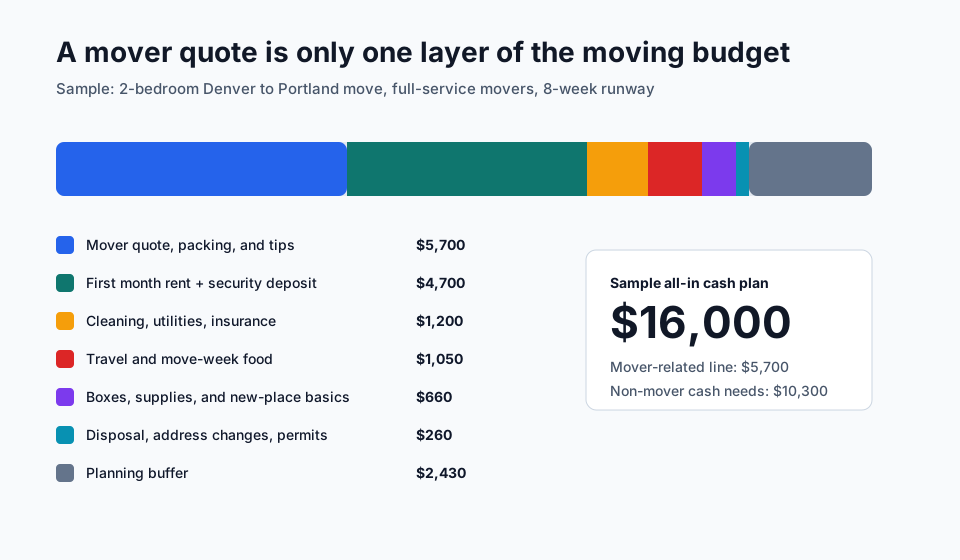
The lesson is not that every two-bedroom move costs $16,000. The lesson is that the first estimate should split the mover quote from the full cash plan.
Open the prefilled Denver-to-Portland move budget to start with the mover quote, deposits, supplies, travel, and buffer from the table, then map the plan to your situation.
The Quote Type Changes Your Risk
For interstate moves, estimate language matters. The Federal Motor Carrier Safety Administration explains that movers must provide a written estimate for household goods moves, and that a rate quote is not the same thing as an estimate. The agency also distinguishes binding and non-binding estimates in its unexpected moving costs guidance.
In plain English:
- A binding estimate is meant to cap what you pay for the listed shipment and services, unless you add items, add services, or the move conditions change.
- A non-binding estimate is an estimate, not a guaranteed final price.
- A binding not-to-exceed estimate can be especially useful because it gives you a ceiling while still letting the final price come down if the shipment weighs less than expected.
When you compare quotes, put each quote into the same line-item categories. Otherwise the cheapest quote may simply be the one that leaves out packing, stair fees, shuttle service, valuation coverage, storage, or delivery-window assumptions.
What Changes the Answer Most?
Distance
Distance changes more than fuel. For local moves, it affects travel time and truck availability. For interstate moves, it changes route planning, shipment logistics, delivery spread, and sometimes storage-in-transit.
Household Size
More rooms usually mean more boxes, more loading time, more truck space, and more weight. Downsizing bulky furniture before a long-distance move can be more valuable than chasing a slightly cheaper mover.
Move Style
A DIY truck can lower the cash quote but add fuel, equipment, lodging, unpaid time off, and physical risk. A container can sit between DIY and full-service. Full-service is easier but usually higher. White-glove can be worth it for complex households, but it should be modeled as a premium choice, not a default.
Timing
Peak season, weekends, end-of-month dates, and short booking windows can raise the price. If your move date is flexible, test midweek and off-peak timing before you lock the plan.
Access and Extras
Elevators, stairs, long carries, parking permits, shuttle trucks, bulky items, piano moves, art crating, packing, storage gaps, and building certificate-of-insurance requirements can turn a clean quote into a changed quote.
A Simple Moving Budget Checklist
Before you book, make sure your budget has a line for each of these:
- Mover, truck, container, or labor help
- Packing supplies or packing service
- Valuation coverage or insurance decision
- Tips for movers or helpers
- Cleaning, disposal, donation, or junk removal
- Parking permits, elevator reservations, or building fees
- Storage if move-out and move-in dates do not line up
- Travel, lodging, fuel, meals, and pet care
- First month rent, security deposit, utility deposits, and new-place basics
- A 10%-15% uncertainty buffer until the quote is firm
If your quote is interstate, also review FMCSA's consumer rights and responsibilities before signing.
Make the Example Your Own
Start from the article assumptions, then test three versions:
- Change the distance tier, move style, and room count to match your move.
- Add or remove the deposits, lease-signing cash, and new-place setup costs that apply to you.
- Mark which lines are still estimates, which have written quotes, and which are already booked or paid.
The first version does not need to be perfect. It needs to be explicit. Once every assumption is visible, you can decide what to trim, what to quote, and what cash needs to be available before move week.
Related Reading
For a deeper look at why mover quotes change so much by distance tier, read Local Move vs Long-Distance Move: Why the Cost Formula Changes.
Sources
- moveBuddha 2026 movers cost guide
- FMCSA guidance on avoiding unexpected moving costs
- FMCSA consumer rights and responsibilities
- U.S. Census migration and geographic mobility data
This article is educational planning content, not a mover quote or financial advice. Get written estimates from licensed movers before signing a contract.
More Moving Cost Calculator articles
Practical examples that connect the calculator to real planning decisions.