Learn the history behind the numbers
Travel costs, explained
A trip is easy to underprice: the flight and the hotel are the numbers you look up, and the meals, the transfers and the days out are the ones you find out about there. Here is what a week away really costs, what its length, style, transport and the number of people do to it, how group trips and camping differ, and how airfares and hotel prices have moved.
Plain words first, the method underneath, and a source under every number. Our Trip Planner, Group Trip Planner and Camping Planner start a budget at typical prices for your answers, and every chart from them on this page is worked by their own engines. Last reviewed November 2026.

At a glance
US figures. Tap one for the history behind it.
- A week away for 2, comfortable style, in the plannerin the US; Deloitte's travelers expected to spend $4,069 on their main summer trip, and the planner's week abroad is $5,490$4,140
- The average domestic airline ticket, the second quarter of 2026up from $386 a year earlier, but $651 in 2000 in today's dollars$445
- The average US hotel night, 2025hotel prices up 59% since 2000, all prices 87%$161
- What each extra person adds to the planner’s week, on average$2,790 for one traveler alone, $1,729 each for four$1,375
- A first adult passport$135 for a child; $130 to renew$165
How a trip budget works
Every trip is four piles of money: getting there and back, somewhere to sleep, food, and things to do. The first is paid once for each traveler; the other three are paid every day you are away. So how long you go and how comfortably you travel set most of the bill, and how you get there sets the rest. In the Trip Planner’s starting week for 2, travel is $1,240, stays is $1,200, food and dining is $1,075, things to do is $625.
The planner’s rule of thumb: Book big things early and small things late: flights and the first night months out, day trips and dinners the week before. Most of a trip's price is set by the first two bookings.
The style you travel in changes the price of every night at once: the room, the meals and the days out. In the planner, the same week for 2 costs $2,150 on a budget, $4,140 in comfort and $8,900 in luxury. Length works more simply: the fare is paid once, so each extra night adds only the room, the food and the day out: going from one week to two adds about $446 a night for two in comfort. In Deloitte’s 2026 survey, Americans planning a summer trip expected to spend $4,069 on their longest one, 17% more than the year before, while only 45% planned one at all.

The Trip Planner's starting trip for 2, by nights and style, in the US
A week costs $2,150 on a budget and $8,900 in luxury; the style changes the total more than doubling the nights does.
Why a long trip is cheaper a night
The flights, the transfers and the first and last days are paid once, however long you stay, so a two-week trip costs much less than two one-week trips. A rental with a kitchen often costs less a night than a hotel for a week or more, and a cheaper base with one splurge night can feel like a more expensive trip.
In the planner: set the nights, the style and home or abroad, and every daily line moves with them; set a budget goal and it tells you how far over or under you are. Try it with your numbers.
Sources: Deloitte: 2026 Summer Travel Survey (4,003 Americans, April 2026), May 2026 (opens in a new tab).
For a family, getting there is often the biggest single cost, because every seat is paid for. The Bureau of Transportation Statistics averages every domestic ticket sold: $445 in the second quarter of 2026, up from $386 a year earlier. That is one ticket, a round trip or a one-way, before any bag or seat fees, which the big airlines now charge even for a first checked bag. Over the long run flying has become much cheaper than prices in general: the $339 average ticket of 2000 would be $651 today, against $398 for 2025’s average in today’s dollars. Driving costs less for two and much less for a family, because the car costs the same however many ride in it; the planner counts fuel and any tolls or parking.

The Trip Planner's starting week, by how you get there
Flying makes the week $4,140; driving $3,225. Staying close takes the travel line away entirely.
The average domestic airline ticket, 1995 to 2025, as paid and in today's dollars
In today's dollars the average ticket fell from $651 in 2000 to $398 in 2025; the price paid rose only from $339 to $388.
Driving: what a mile costs
Regular gasoline averaged about $3.10 a gallon across 2025 and $3.81 in mid-November 2026. Fuel is only part of what a car costs to run: the IRS lets businesses claim 76 cents a mile from July 2026 (72.5 cents before), which also counts wear, tires and insurance. For a trip budget, fuel, tolls and parking are what you will actually spend; the wear shows up later.
In the planner: choose to fly, drive or take the train, and add the airport transfers and getting around once you are there, the lines people most often leave out. Try it with your numbers.
Sources: Bureau of Transportation Statistics: Average Domestic Airline Itinerary Fares, 1995 to Q2 2026 (opens in a new tab); US Energy Information Administration: US regular gasoline retail prices, weekly and annual (opens in a new tab); IRS: Standard mileage rates (2026, raised July 1) (opens in a new tab).
The average room night sold in a US hotel cost $161 in 2025, by CoStar’s count of hotels nationwide, and about $162 in August 2026, before room taxes and any resort fee, which the booking site must now include in the price it shows. That average hides a wide range: a roadside motel and a downtown hotel on a Saturday in October are different markets. The government’s own travel allowance shows the spread: from October 2026, a federal traveler gets $113 a night for lodging in most of the country, but up to $365 in Boston in its busiest months.

Airfares, hotel rooms and all prices since 2000 (2000 = 100)
By 2025 hotel rooms cost 59% more than in 2000 and prices in general 87% more, while airfares were up only 7%.
The federal lodging allowance a night, busiest month, fiscal 2027
$113 a night in most of the country, up to $365 in Boston: the same room budget buys very different nights.
In the planner: type where you are going and it prices the room for that place, and finds real places to stay nearby. Try it with your numbers.
Sources: CoStar (STR): US hotel performance, full year 2025 (January 2026) and August 2026, via Hospitality Net (opens in a new tab); BLS consumer price index: lodging away from home (CUUR0000SEHB), annual averages, via FRED (opens in a new tab); BLS consumer price index: airline fares (CUUR0000SETG01), annual averages, via FRED (opens in a new tab); BLS consumer price index: all items (CPIAUCSL), annual averages, via FRED (opens in a new tab); GSA: FY 2027 per diem rates (October 2026 to September 2027) (opens in a new tab).
A first passport for an adult costs $165: $130 to the State Department plus a $35 fee to the post office or library that takes the application. Every traveler needs one, children included: a child’s book costs $135, lasts five years rather than ten, and usually needs both parents to sign. So two parents and two children going abroad for the first time spend $600 before booking anything. Paying $60 to expedite is cheaper than a lost trip, but applying early is cheaper still. Abroad, budget for your card’s foreign transaction fee (often 3% of every purchase, though many travel cards charge none), travel insurance for the deposits you cannot get back, and a phone plan.
In the planner: choose abroad and the passports, longer flights and travel documents join the plan. Try it with your numbers.
Saving up for a trip, month by month: Saving, explained.
Each extra traveler adds a seat, meals and tickets, but shares the room and the car, so the cost each falls as the group grows. Traveling alone costs the most: in the planner a week costs $2,790 for one, against $2,070 each for 2 and $1,729 each for four. Group trips follow the same rule at a bigger scale: a bus and a block of rooms cost less a head as more people fill them.

The Trip Planner's starting week, each traveler's share, by how many go
$2,790 for one person alone, $1,729 each for four: the room and the car are shared.
The Group Trip Planner's 2-night trip by charter bus, each person's cost, by group size and lodging
A hotel trip costs $675 a person for 10 and $317 for 100: the bus and the organizing are shared, so the cost a head falls as more people share them.
The lines people forget
- Passports and visas are one line per traveler, not one line per trip.
- Getting from the airport, and getting between towns, is a real cost people leave out.
- The first and last day are mostly travel — plan the middle.
Splitting the bill fairly
With friends, decide before you book whether you split everything evenly or each pays for their own room and meals: a couple and two single travelers sharing a rental rarely want the same split. For a club, a school or a team, set the fee a person to cover the trip with a little to spare, and collect deposits before you commit to the bus or the rooms.
In the group planner: set the group size, the fee a person and who has paid, and it shows whether the fees cover the trip. Try it with your numbers.
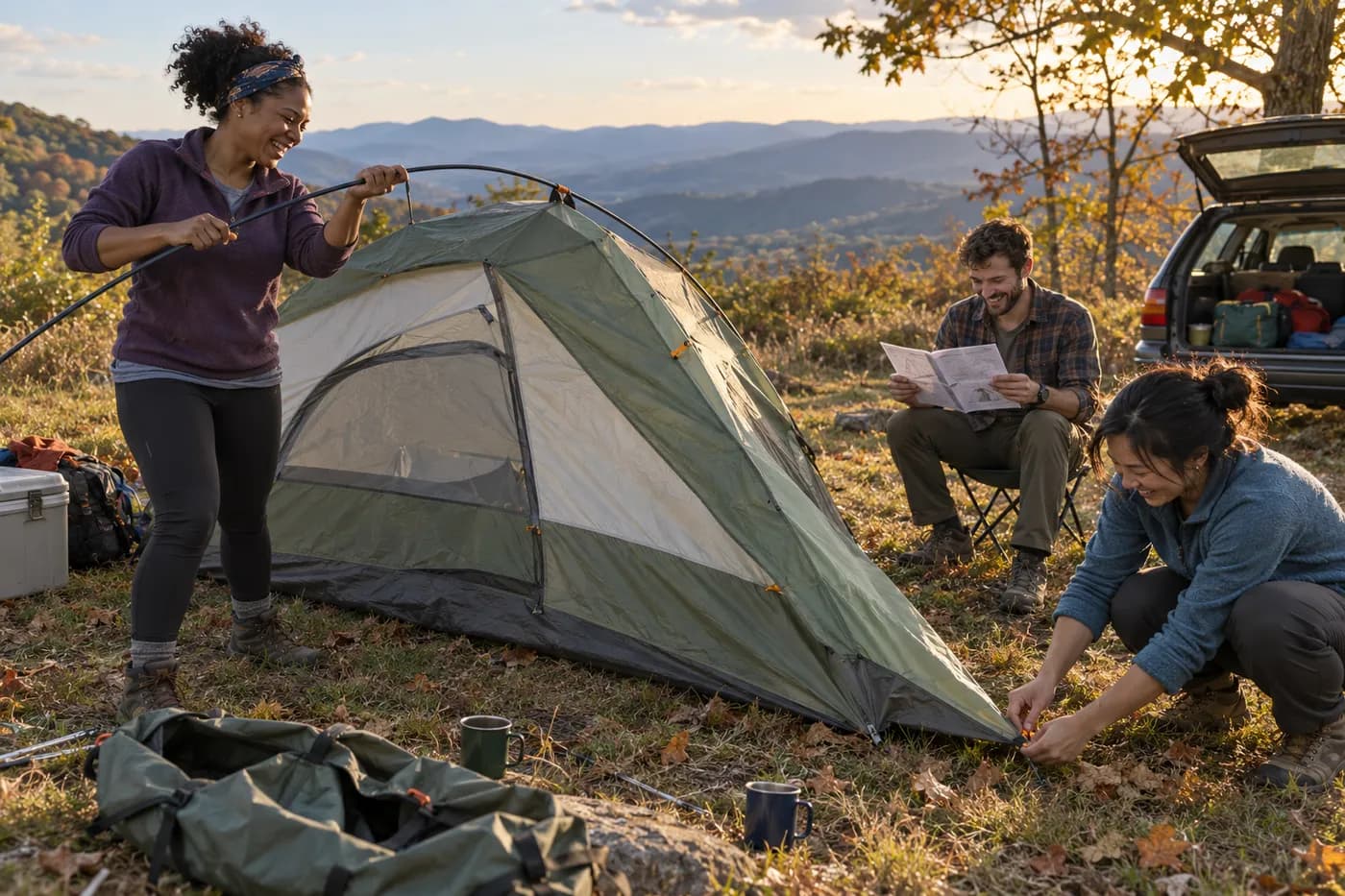
Camping swaps the biggest cost of a trip, the room, for a campsite at a fraction of the price, but asks for gear first. The planner’s starting weekend counts the site, food, fuel and the gear a first trip usually needs; once you own the tent and stove, the next trips cost far less. A backcountry trip needs lighter gear and permits; a festival is mostly the ticket (festival costs the most at $2,220). Entry to national parks is covered for a year by the $80 America the Beautiful pass for US residents (non-residents pay more since 2026), worth it after two or three of the parks that charge a vehicle fee; many parks are free.
The Camping Planner's starting 3-night trip for 2, by kind of trip
From $1,300 to $2,220: the kind of trip decides what the money goes on, the site, the permits or the ticket.
What campers forget
- Reservation fees, permits and passes are a line on top of the site itself.
- Water — containers, a filter, extra storage — is easy to under-plan.
- Bear-safe food storage is required in many parks and is not free.
- The drive, or the flight, to the campsite is often the biggest line on the trip.
In the camping planner: choose a car camp, the backcountry or a festival, and cross off the gear you already own. Try it with your numbers.
Sources: National Park Service: Entrance passes (America the Beautiful) (opens in a new tab); National Park Service: fees for visitors who are not US residents, from January 1, 2026 (opens in a new tab).
Try it with your own numbers
The Trip Planner starts your budget at typical prices for your dates, place and style, then keeps the bookings, the day-by-day plan, the packing list and who has paid what in one plan you can share with everyone going.

Educational information, not individual financial advice. Prices vary widely by place, season and how far ahead you book.