Learn the history behind the numbers
Home project costs, explained
Work on a home is easy to underprice: the cabinets or the sofa are the numbers you look up, and the permit, the old floor that has to come out and the weeks without a kitchen are the ones you find out about later. Here is what a remodel really costs and what moves it, then what it costs to furnish a room, fit out a closet, redo a yard and build a new house, the rules that protect you whenever you hire someone, the tax rules, and how building prices have moved.
Plain words first, the method underneath, and a source under every number. Our Renovation, Room Design, Closets & Built-ins, Outdoor Projects and New Home Construction planners start a budget at typical prices for your answers, and every chart from them on this page is worked by their own engines. Last reviewed November 2026.

At a glance
US figures. Tap one for the history behind it.
- A mid-size kitchen remodel done by a contractor, in the plannerbetween Houzz's $35,000 and $55,000 medians for a major remodel of a smaller and a larger kitchen; $13,650 for a refresh$45,175
- What a homeowner who made improvements spent, 2021 to 2023 (typical)the Census American Housing Survey; $827 billion in all over the three years$6,500
- Furnishing an empty living room, in the plannerfrom a budget room to a high-end one; $6,775 mid-range$2,120 to $18,100
- A mid-size patio done by a contractor, in the planner$3,800 small, $28,475 major, $6,325 if you do most of it yourself$10,750
- A new house built on the owner's land, 2025 (typical contract price)Census; the land is not included. The planner's builder-grade house of a typical size on your own lot is $458,725$404,000
- Time to cancel a sale of $25 or more made at your homethe federal Cooling-Off Rule; California gives owners 65 and older 5 days to cancel a home improvement contract3 business days
How a home project budget works
Every home project is the same few piles of money: the things you buy (cabinets, tile, a sofa, shelving), the labor to put them in, taking out what is there now, the permit, and a reserve for what nobody can see until the wall is open. A permit is the town’s written permission to do the work, and it usually comes with inspections. A contingency, or reserve, is money set aside for surprises. In the Renovation Planner’s starting mid-size kitchen remodel, kitchen is $39,000, living through it is $4,100, demolition and debris is $1,800, permits and paperwork is $275. The “living through it” line holds the planner’s reserve for what turns up behind the walls, $4,100 or 10% of everything else. Meals out while the kitchen is gone are not in it, so add a line if you expect them.
What people forget to budget
- Permits and inspection fees are their own line, and skipping them costs more later.
- Uncovered work — what the contractor finds behind the wall — is the line that grows.
- Design or planning time is billed before anything is built.
- You will be without the room for weeks: eating out or a temporary kitchen is real money.
A remodel means changing a room rather than just repairing it, and how much of the room you change decides the bill more than anything else. In the planner a refresh keeps the layout and the cabinets and replaces surfaces such as paint, hardware and lighting; a mid-size job replaces the cabinets, counters and appliances; a full redo takes the room back to the studs (the wooden frame inside the walls) and can move plumbing and walls. Done by a contractor at national prices, a kitchen is $13,650, $45,175 and $81,150; a bathroom $7,150, $16,475 and $40,150.

The Renovation Planner's starting remodel by room and by how much you change
A kitchen goes from $13,650 for a refresh to $81,150 for a full redo: the scope moves the bill more than the room does.
Two national surveys measure what people really spend, and they disagree because they count different people. The Census Bureau’s American Housing Survey asks a sample of every homeowner: of 86.9 million owners, 51.6 million (59%) made improvements in 2021 to 2023, spending a typical $6,500 each and $827 billion in all. Its typical kitchen remodel cost $8,000 and bathroom $5,000, and 36% of all projects were done by the owners themselves. The Houzz & Home study asks people on the Houzz home-design site who renovated: their typical renovation in 2025 cost $20,000, a kitchen $24,000, a main bathroom $15,000 and a guest bathroom $7,000. A major kitchen remodel (at least all the cabinets and appliances replaced) cost a typical $35,000 for a kitchen under 200 square feet and $55,000 for a larger one.
What homeowners typically spent on each kind of project, 2021 to 2023
A new roof was the most expensive common project at $10,000; a kitchen remodel cost $8,000 and a bathroom $5,000, counting small jobs and do-it-yourself work.
Why the planner starts above the surveys, and which setting matches them
The planner starts with a contractor doing all of a mid-size job, which is bigger than most in either survey: the Census figures include small jobs and work owners did themselves. Its $45,175 mid-size kitchen sits between Houzz's $35,000 and $55,000 medians for a major remodel of a smaller and a larger kitchen; at local prices 0.8 times the national average it is $38,125, the nearest the chart below comes to the smaller kitchen. Its $16,475 mid-size bathroom is near Houzz’s $15,000 main bathroom. Set the scope to Refresh and the kitchen falls to $13,650, between the Census $8,000 and the Houzz $24,000.
What a remodel adds when you sell
Zonda’s 2025 Cost vs. Value report prices the same projects across the country and estimates what each adds to a home’s sale price. A minor kitchen remodel cost an average $28,458 and added $32,141 (112.9% of its cost); a new garage door cost $4,672 and added $12,507. Most projects return less than they cost: a new wood deck averaged $18,263 and added $17,323. Remodel for the years you will live with it, not for the sale.
In the planner: pick the room and the scope, and each line (cabinets, counters, appliances, plumbing, flooring, the permit, the old room coming out) is priced for that job; your contractor’s quote replaces the estimate when it comes in. Try it with your numbers.
Sources: US Census Bureau and HUD: Home Improvements, 2023 American Housing Survey (projects 2021 to 2023) (opens in a new tab); Houzz: 2026 U.S. Houzz & Home Renovation Trends Study (projects done in 2025) (opens in a new tab); Zonda: 2025 Cost vs. Value report, national averages (September 2025) (opens in a new tab).
After the scope, three things move a remodel most. Where you live: tradespeople and materials cost more in some places than others. The planner reads a local price level from your address; between 0.8 and 1.5 times the national average the mid-size kitchen goes from $38,125 to $62,925. Doing some yourself: the planner takes the labor off the lines you say you will do, and 36% of all home projects in the Census survey were done by the owners. The kitchen goes from $45,175 done by a contractor to $39,725 mostly yourself, a smaller saving than people expect because cabinets, counters and appliances cost the same whoever fits them; a bathroom, where more of the bill is labor, falls from $16,475 to $11,075. Where you live meanwhile: staying costs nothing extra in the planner, while a short rental adds $3,300 (a $3,000 temporary living line and a larger reserve).

The Renovation Planner's mid-size kitchen and bathroom, by local building prices
From $38,125 where prices are 0.8 times the national average to $62,925 at 1.5 times: the same kitchen, a $24,800 difference.
How big a reserve to keep
No national survey measures by how much remodels run over, but in Houzz’s 2026 study 37% of renovating owners went over their budget, often because they chose more expensive materials (35%) or added to the job (31%). The planner sets aside 10% of the rest of the job, $4,100 on the starting kitchen. Keep more for an older house or a full redo, where the wall is more likely to hide rot, old wiring or pipes that have to be replaced; you can raise the reserve line in the planner.
In the planner: your address sets the local price level, and choosing “some” or “mostly” do it yourself takes the labor off the lines you will do. Try it with your numbers.
Sources: US Census Bureau and HUD: Home Improvements, 2023 American Housing Survey (projects 2021 to 2023) (opens in a new tab); Houzz: 2026 U.S. Houzz & Home Renovation Trends Study (projects done in 2025) (opens in a new tab).
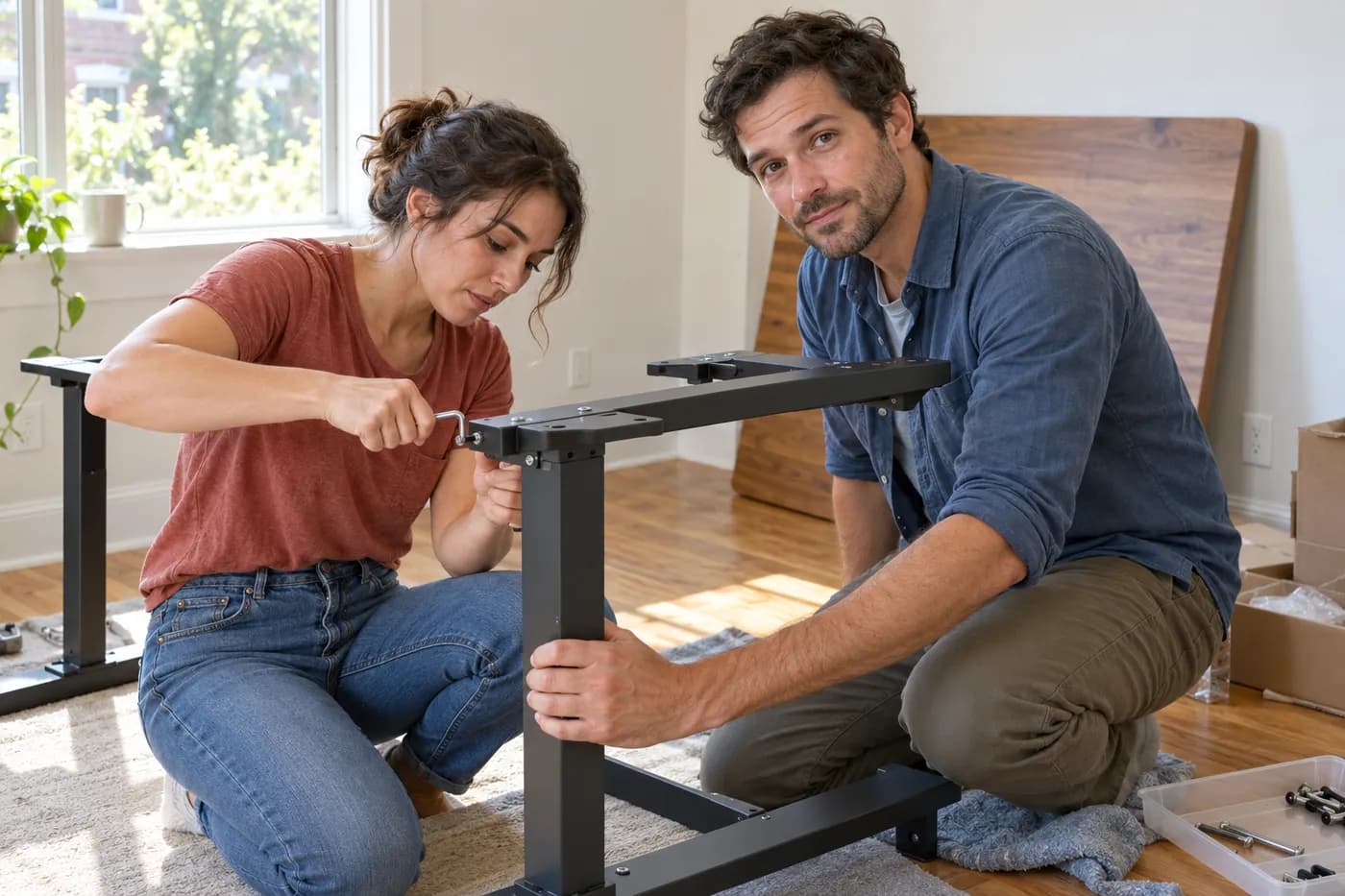
Furnishing is the one home project with no labor bill to speak of, so the price level you shop at decides almost everything. In the Room Design Planner an empty living room is $2,120 on a budget, $6,775 mid-range and $18,100 high-end; a whole 1-bedroom apartment is $5,425 to $43,900, and a 2-bedroom apartment $6,725 to $52,850. Keeping some pieces brings the living room to $5,450, and a full-service designer takes it to $10,775. For comparison, the government’s Consumer Expenditure Survey found the average household spent $2,355 in 2025 on furniture, appliances and other household equipment, down from $2,414 the year before: most years are replacement, not a whole room at once.
The Room Design Planner's empty room, by room and budget level
A living room goes from $2,120 to $18,100: high-end costs more than 8 times the budget room.
In the planner: choose the rooms and the budget level, cross off what you are keeping, and each piece gets its own line you can swap for the one you find. Try it with your numbers.
Sources: BLS: Consumer Expenditures in 2025 (news release, October 29, 2026) (opens in a new tab).
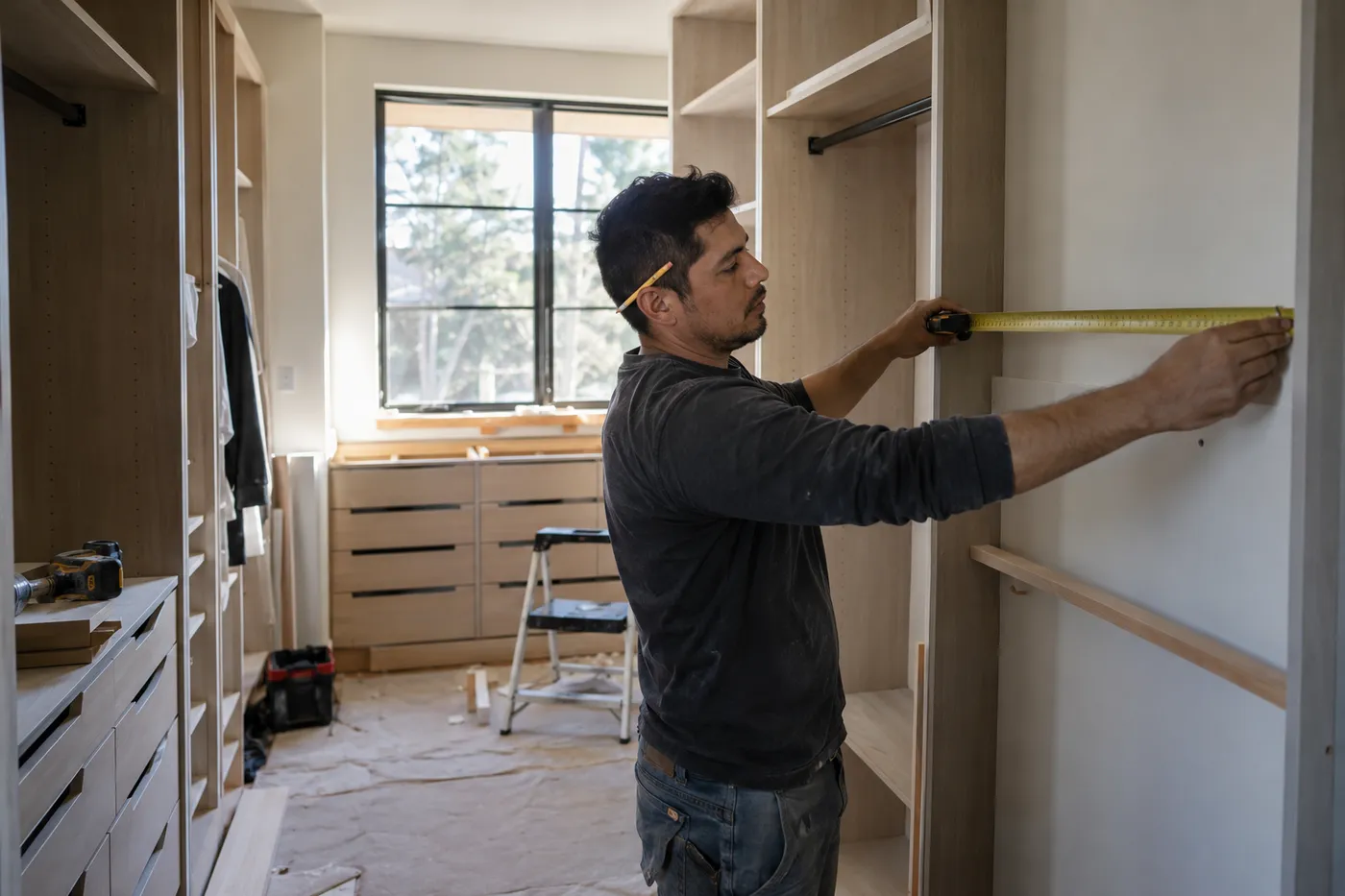
There is no national survey of what closets cost, so this section is the planner’s own pricing. A closet system is the shelves, rods and drawers inside a closet; a built-in is furniture made to fit a wall, such as a bookcase or a mudroom bench. Who builds it moves the price most: the starting walk-in is $1,810 built yourself from parts, $2,585 as a cut-to-size kit (cut to your measurements, you fit it), $5,545 from a closet company that designs and installs it, and $5,970 from a carpenter who builds it on site. The top finish (Custom) takes the kit to $5,240.
The Closets & Built-ins Planner's starting piece, by what you build and who builds it
A walk-in is $1,810 built yourself and $5,970 from a carpenter: a carpenter costs about 2.3 times the kit.
The planner’s rule of thumb: Measure each wall at three heights, and the ceiling, the door swing and every outlet and switch. Walls are rarely square, and a system cut to one measurement will not fit the other two.
In the planner: pick the pieces, the finish and who builds them, and get a line for the system, the accessories and any wall or electrical work. Try it with your numbers.
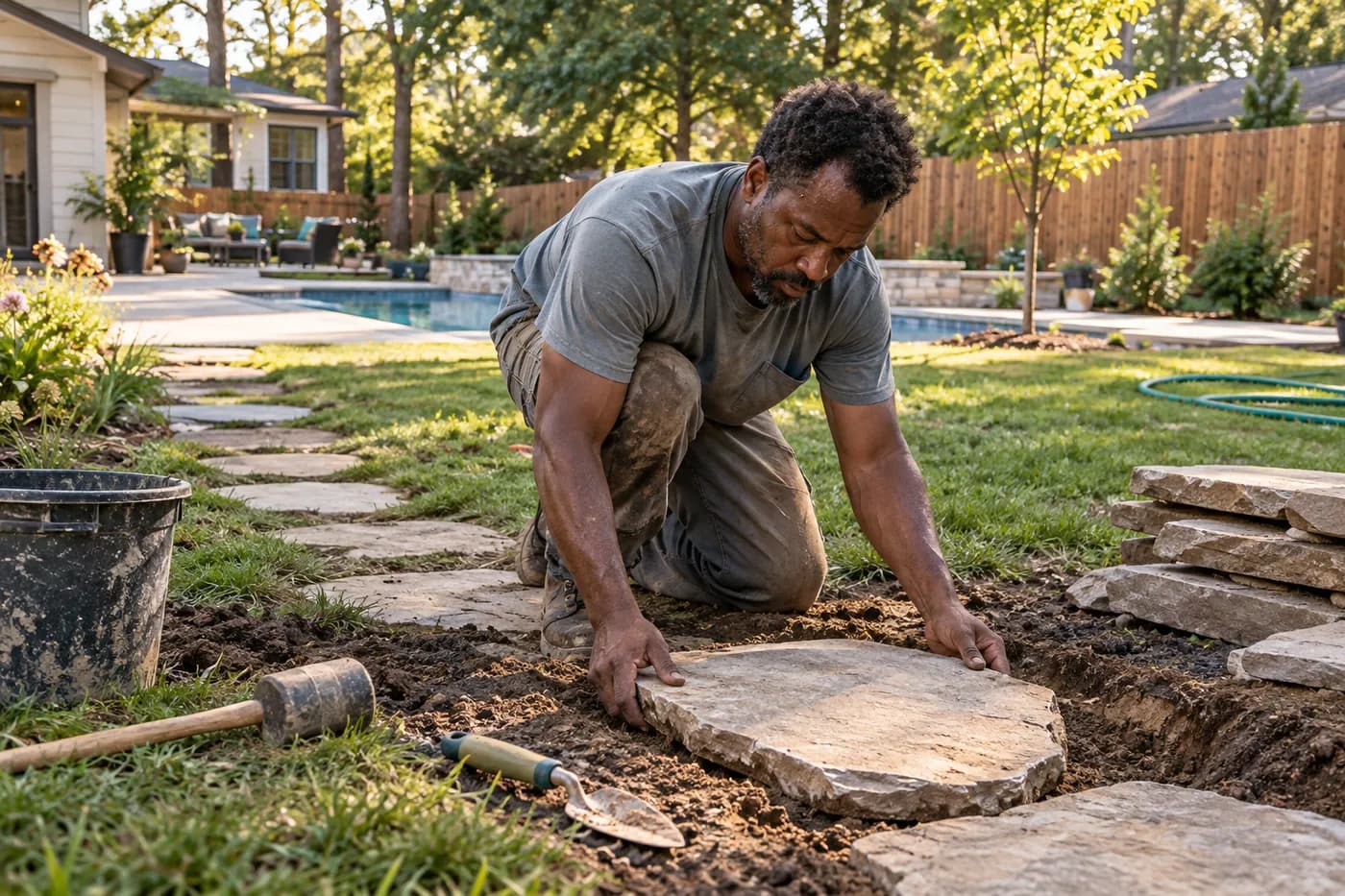
Outdoor projects range further than any other home work: in the Outdoor Projects Planner, one project at mid-size goes from $6,100 for lawn / sod to $94,250 for pool / in-ground spa. Hardscape means the hard parts of a yard, such as a patio, paths and walls, against softscape, the plants and lawn. A mid-size patio is $10,750 done by a contractor and $6,325 if you do most of it yourself, because so much of it is labor. The planner prices a patio and a deck alike at the same size; your quotes will differ. Its $13,975 mid-size deck is below the $18,263 national average for a wood deck in Zonda’s Cost vs. Value report, which found it added $17,323 at sale (94.9% of its cost). The Census survey’s owners spent a typical $4,800 on a porch, deck or patio, because many were small or done themselves; the planner’s small patio, $3,800, is the nearest setting. The planner keeps a 10% reserve on each job.
The Outdoor Projects Planner's mid-size project, one at a time, done by a contractor
From $6,100 for lawn / sod to $94,250 for pool / in-ground spa: pick the project before you pick the budget.
A patio, a deck and a fence in the planner, by size
A patio goes from $3,800 small to $28,475 major: a major job is about 7 times a small one.
The planner’s rule of thumb: Ask every bidder for the same written scope, and make drainage and utilities their own lines in it — an unquoted allowance is where the overrun lives. Before anyone digs, call 811, the free national number that has buried gas, power and water lines marked.
In the planner: choose one project or several, the size and how much you will do yourself; permits for decks, fences and pools get their own line. Try it with your numbers.
Sources: Zonda: 2025 Cost vs. Value report, national averages (September 2025) (opens in a new tab); US Census Bureau and HUD: Home Improvements, 2023 American Housing Survey (projects 2021 to 2023) (opens in a new tab).
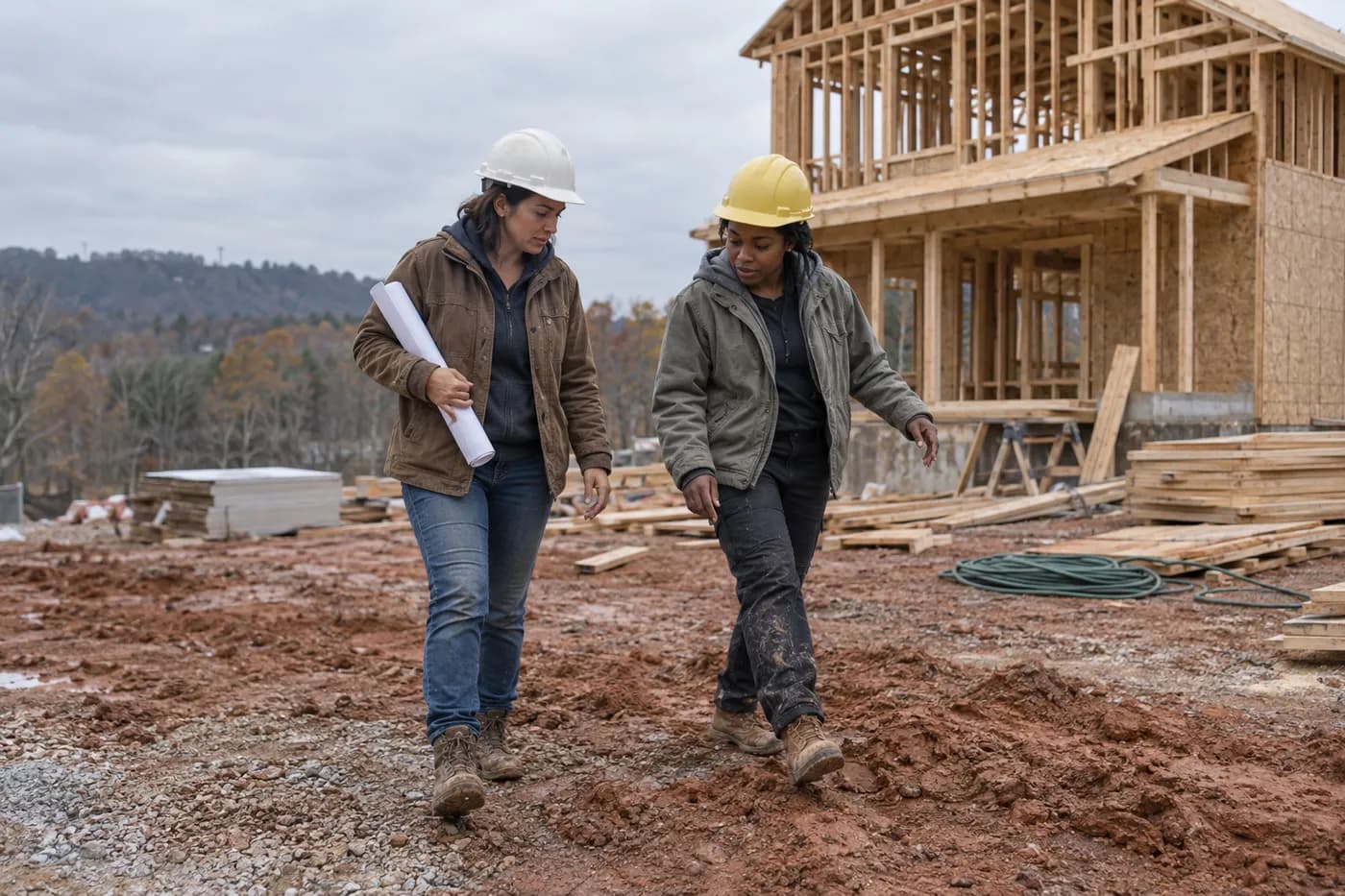
Building a house is a remodel many times over, plus land. The Census Bureau counts houses built by a contractor on land the owner already had: 131,000 were started in 2025, at a typical contract price of $404,000, land not included. Census’s summary does not give the size of those houses; the typical new single-family house of every kind finished that year was 2,142 square feet. The National Association of Home Builders counts something different: houses its builders sell with the land. In its 2024 survey the average sold for $665,298 with 2,647 square feet finished; building it was 64.4% of the price, $428,215 or about $162 a square foot, and the finished lot (land ready to build on, with roads and utilities) 13.7%. The town’s share adds up: on average $7,640 for the building permit, $6,367 in impact fees (a charge toward new roads and schools) and $6,260 to connect water and sewer.
The finish is the quality of everything you see and touch. Builder grade is the standard materials a builder puts in every house; custom means choosing better ones room by room; luxury is the top end throughout.
The New Home Construction Planner's house by size and finish, buying the land
At 2,400 square feet, $627,625 at builder grade and $958,475 at luxury: the finish alone is a $330,850 difference.
The New Home Construction Planner's starting house, by kind of area
From $583,425 (lower-cost area) to $1,406,275 (premium / coastal): the same house, priced where it stands.
Why the planner starts above the Census figure, and which setting matches it
The planner starts with buying land (land & site work is $163,300), a custom finish and a 2,400 square foot house, all above the typical Census house. Set it to builder grade, 2,142 square feet, on your own lot, and it is $458,725, about $55,000 above the Census $404,000, because the planner also counts the architect, a driveway, landscaping and a 6% reserve. A well and septic system instead of city water and sewer adds $10,150.
What new builders forget
- Land closing costs, survey and soil test come before any building does.
- Development and impact fees are charged by the municipality on top of the permit.
- Utility taps and hookups are a real line, and a well and septic are a bigger one.
- Temporary site facilities are billed for as long as the build runs.
The planner’s rule of thumb: Read the builder contract's allowances before you sign, and treat every change order as a decision, not a detail. An allowance is the amount the contract sets aside for something you choose later, such as tile; anything more expensive is extra. A change order is a written change to the agreed work and price.
In the planner: set the size, the finish, the area and whether you need land, and the draws (the payments to the builder at each stage) follow the build. Try it with your numbers.
Sources: US Census Bureau: Highlights of 2025 Characteristics of New Housing (opens in a new tab); National Association of Home Builders: Cost of Constructing a Home, 2024 (survey of builders) (opens in a new tab).
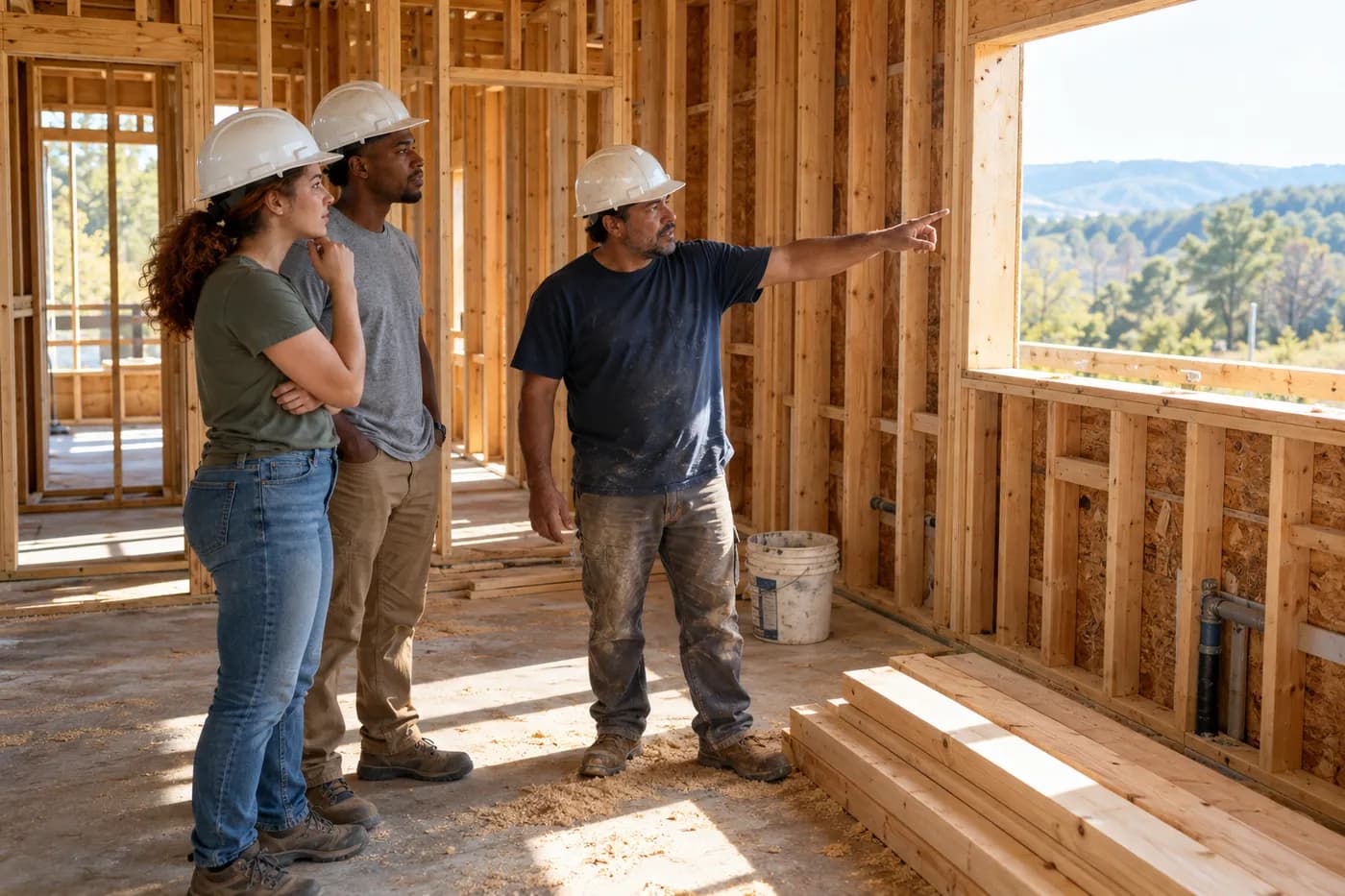
Check before you hire. Look up the contractor’s license and insurance with your state’s contractor board, get two or three written bids for the same work, and put every change in writing.
Three days to change your mind. The Federal Trade Commission’s Cooling-Off Rule lets you cancel a sale of $25 or more made at your home, or $130 or more at a temporary place such as a home show, within three business days. It does not cover a contract you first negotiated at the contractor’s showroom or shop, a visit you asked for to repair or maintain something (though extra things sold to you on that visit are covered), or an emergency repair where you waive the right in your own handwriting. If the job is paid for with a loan secured on your home, the federal Truth in Lending rules give you a separate right to cancel the loan until midnight of the third business day.
California, as a worked example. State laws differ, so check your own. In California a home improvement job over $500 in labor and materials needs a written contract, the down payment may not be more than 10% of the price or $1,000, whichever is less, and you can cancel within three days of signing, or 5 days if you are 65 or older. A few contractors with a blanket performance and payment bond on file with the state board may ask for more up front. Pay the rest as the work is done, never ahead of it.
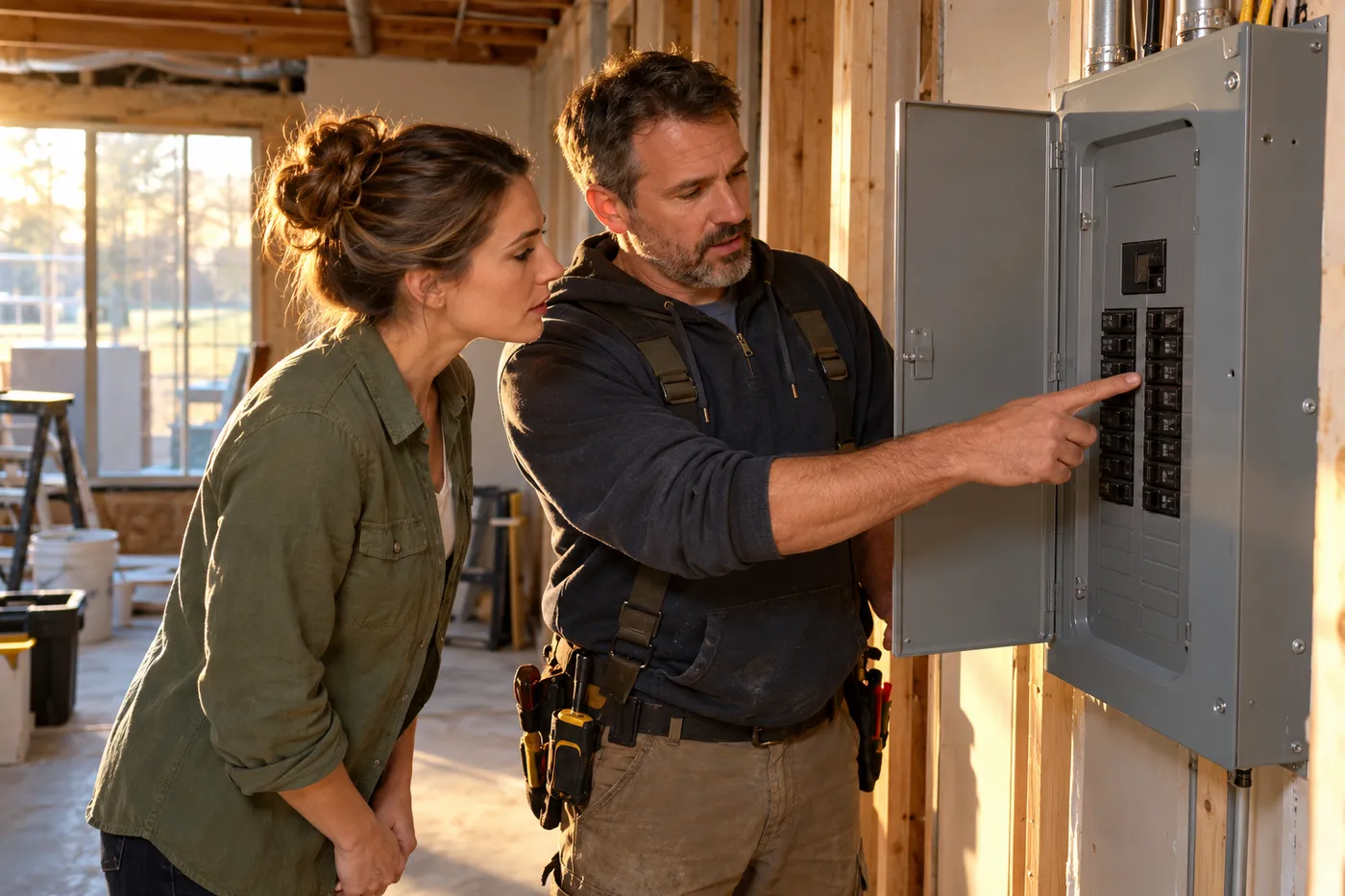
Lien releases. A mechanics lien is a claim on your house by a supplier or worker who was not paid. In California, the board warns, “the homeowner is ultimately responsible for payment — even if they already have paid the direct contractor.” Each time you pay, take a conditional lien release (or waiver) from the contractor and the main suppliers, which takes effect once the payment goes through, and an unconditional one only after the money has cleared. Lien rules vary by state.
Old paint. In a home built before 1978, a company paid to disturb painted surfaces must be a Lead-Safe Certified Firm, certified by the EPA or by your state where it runs the program. Small jobs, disturbing 6 square feet of paint or less a room inside or 20 square feet or less outside, are exempt, though replacing windows never is. Ask for the certificate.
How people pay. In Houzz’s 2026 study, 84% of renovating homeowners paid at least partly from savings and 34% partly by credit card.
In the planner: record your contractor’s name, license and insurance, and set the payments as a schedule so you can see that you never pay ahead of the work. Try it with your numbers.
Sources: FTC Cooling-Off Rule, 16 CFR 429.0 (definitions and exclusions) (opens in a new tab); Consumer Financial Protection Bureau: Regulation Z, 12 CFR 1026.23, right of rescission (opens in a new tab); California Contractors State License Board: What should I look for in a contract? (opens in a new tab); California Contractors State License Board: Warnings and exceptions (five days to cancel for owners 65 and older) (opens in a new tab); California Contractors State License Board: What is a mechanics lien? (opens in a new tab); US EPA: Lead Renovation, Repair and Painting Program (opens in a new tab); US EPA: Renovation, Repair and Painting Program, contractors (exemptions for small jobs) (opens in a new tab); Houzz: 2026 U.S. Houzz & Home Renovation Trends Study (projects done in 2025) (opens in a new tab).
Until the end of 2025, two federal credits paid back 30% of energy-saving work on a main home. The home improvement credit gave up to $1,200 a year for insulation, windows and doors, plus up to $2,000 for a heat pump, heat-pump water heater or biomass stove ($3,200 in all), for work finished and working (“placed in service”) before the end of 2025. For 2025 work it also required each item to come from a qualified manufacturer and its identification number to be written on the return; insulation was exempt. A separate credit covered solar panels and batteries; the IRS says it “is not available for any property placed in service after December 31, 2025.” If you finished the work in 2025, the credit belongs on that year’s return, which was due in April 2026; a credit you missed can usually be claimed by amending the return within three years. Some states and utilities still offer rebates.
What still helps is keeping your receipts. The IRS lets you add the cost of improvements, such as a new kitchen or landscaping, to your home’s cost (its “basis”), which lowers the taxable gain when you sell. Repairs and upkeep do not count unless they are done as part of a larger remodel. Many sellers owe nothing anyway: up to $250,000 of gain on a main home is tax-free if you owned it and lived in it for two of the last five years, or $500,000 for a married couple filing together if both lived there two of the five years and neither claimed the exclusion on another home in the two years before.
In the planner: each paid line keeps its amount and date, a ready record of what you spent on the house. Try it with your numbers.
Sources: IRS: Energy efficient home improvement credit (opens in a new tab); IRS: Residential clean energy credit (opens in a new tab); IRS Publication 523: Selling Your Home (basis and improvements) (opens in a new tab).
The Bureau of Labor Statistics tracks what builders pay for the goods that go into a house: lumber, concrete, drywall (the boards that make inside walls), wiring, pipe, windows and fixtures. That index has risen 127% since 2000, against 87% for prices in general. Most of the gap opened in 2020 to 2022, after the pandemic, when materials prices rose 38% in two years; they have not come back down. This is materials only; labor is the other big part of most bills. Harvard’s Joint Center for Housing Studies expects homeowners to spend about $525 billion a year on improvements and repairs through the third quarter of 2027, only 1.5% more than a year earlier: a steady market, so good contractors stay busy and are worth booking early.
Building materials and all prices since 2000 (2000 = 100)
By 2025 building materials cost 127% more than in 2000 and prices in general 87% more; the gap opened in 2020 to 2022.
In the planner: prices are today’s; a quote that is months old may already be low, so ask how long it holds. Try it with your numbers.
Sources: BLS producer price index: net inputs to residential construction, goods (WPUIP2311001), annual averages, via FRED (opens in a new tab); BLS consumer price index: all items (CPIAUCSL), annual averages, via FRED (opens in a new tab); Harvard Joint Center for Housing Studies: Leading Indicator of Remodeling Activity, October 2026, as reported by Builder.Media (opens in a new tab).
Try it with your own numbers
The Renovation Planner starts your budget at typical prices for your room, scope and address, then keeps the quotes, the contractor, the payments and what is left in one plan you can share with everyone in the house.
For other projects, open the Room Design, Closets & Built-ins, Outdoor Projects or New Home Construction planner.
Educational information, not individual financial, legal or tax advice. Prices vary widely by place, house and season, and contractor rules differ from state to state.